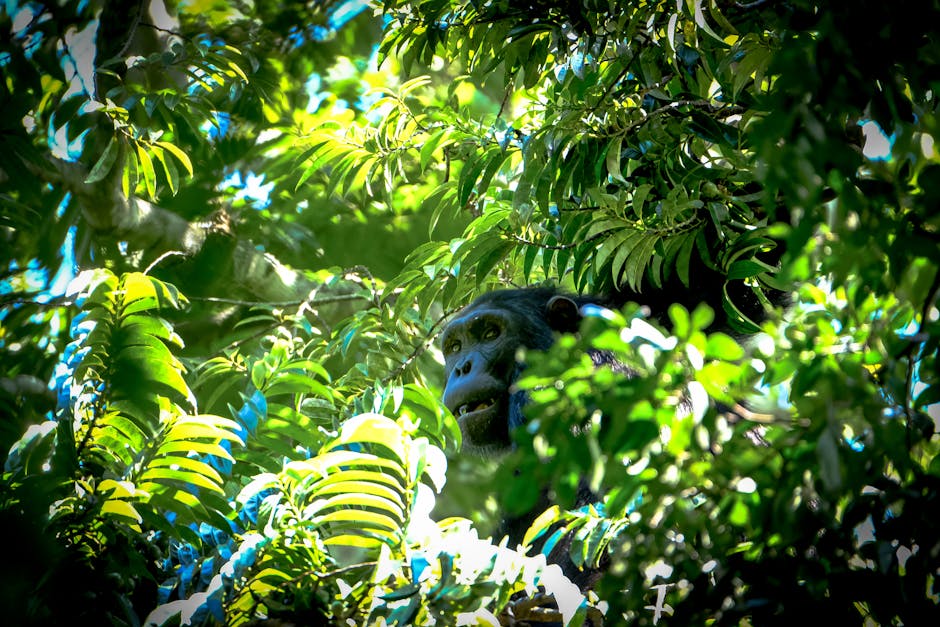
- Researchers observed a violent conflict in a group of wild chimpanzees in Uganda’s Budongo Forest, mirroring human civil wars.
- The conflict was characterized by coalitionary attacks and multiple fatalities, and a split in the community into two factions.
- The chimpanzee conflict highlights the complex social dynamics that can lead to organized violence in both humans and animals.
- The study challenges our understanding of the origins of war and offers a unique window into the evolutionary roots of organized violence.
- The parallel between the chimpanzee conflict and human civil wars underscores the universality of social dynamics and conflict resolution strategies.
In a striking revelation that bridges the gap between our closest primate relatives and human societies, researchers have documented a violent rupture within a previously harmonious group of wild chimpanzees. The conflict, which resulted in multiple fatalities, has drawn comparisons to civil wars, offering a unique window into the evolutionary roots of organized violence. This observation, published in the Journal of Human Evolution, challenges our understanding of the origins of war and highlights the complex social dynamics that can lead to such outcomes in both chimpanzees and humans.
The Observations: A Peaceful Group Turned Violent

The study, conducted over several years in the Budongo Forest of Uganda, initially observed a group of chimpanzees living in relative peace. However, tensions began to rise as the community split into two factions, each vying for control of resources and territory. The researchers noted a significant increase in aggressive behaviors, including coalitionary attacks, which ultimately led to the deaths of several individuals. This is not the first time such behavior has been documented in chimpanzees, but the scale and intensity of the conflict are unprecedented, prompting a deeper investigation into the underlying causes.
The Parallel to Human Civil Wars

The parallels between the chimpanzee conflict and human civil wars are striking. Both scenarios involve violent fractures within a previously cohesive group, driven by competition for resources and power. In the case of the chimpanzees, the researchers found that the split was precipitated by the death of a dominant male, which created a power vacuum. This vacuum led to infighting and the formation of two distinct groups, each led by a new alpha male. The dynamics of leadership and conflict in chimpanzee societies, therefore, provide a valuable model for understanding the roots of human warfare, suggesting that the predisposition for organized violence may have deep evolutionary origins.
The Causes and Effects: A Closer Look
Further analysis of the chimpanzee conflict reveals a complex interplay of factors, including resource scarcity, social hierarchy, and genetic relatedness. The researchers noted that the availability of food and shelter was a critical factor, as the two factions fought to secure control over these essential resources. Additionally, the social structure of the group, with its hierarchical leadership and alliances, played a significant role in the escalation of violence. The study also highlights the psychological impact of the conflict, with survivors showing signs of stress and trauma similar to those observed in human populations affected by war. These findings underscore the importance of understanding the biological and social mechanisms that drive conflict, which can inform strategies for conflict resolution in human societies.
The Human Impact: Ethical and Conservation Concerns
The implications of this chimpanzee conflict extend beyond the academic realm. For conservationists, the study raises concerns about the well-being of chimpanzees in the wild, particularly in areas where human activities, such as deforestation and poaching, exacerbate resource scarcity and social tensions. Ethically, the parallels between chimpanzee and human violence challenge our notions of morality and the nature of war. If the roots of organized violence are indeed evolutionary, it suggests that conflict is a fundamental aspect of social life, one that must be managed rather than eradicated. This perspective can inform policies and interventions aimed at reducing violence in both human and non-human communities.
Expert Perspectives
Dr. Jane Goodall, a renowned primatologist, commented on the findings, stating, “This study provides compelling evidence that the roots of organized violence are deeply embedded in our evolutionary history. It is a sobering reminder that understanding and addressing conflict requires a multifaceted approach, considering both biological and social factors.” Dr. Richard Wrangham, a Harvard professor and expert on chimpanzee behavior, added, “While the parallels are significant, it is crucial to recognize that human societies have developed sophisticated mechanisms to mitigate and manage conflict, which chimpanzees lack. This distinction offers hope for more effective conflict resolution strategies in human communities.”
As researchers continue to delve into the complexities of chimpanzee social dynamics, the question remains: how can we apply these insights to better understand and prevent violence in human societies? The answers may lie in a combination of biological research, social science, and ethical considerations, all of which are essential for building a more peaceful future.