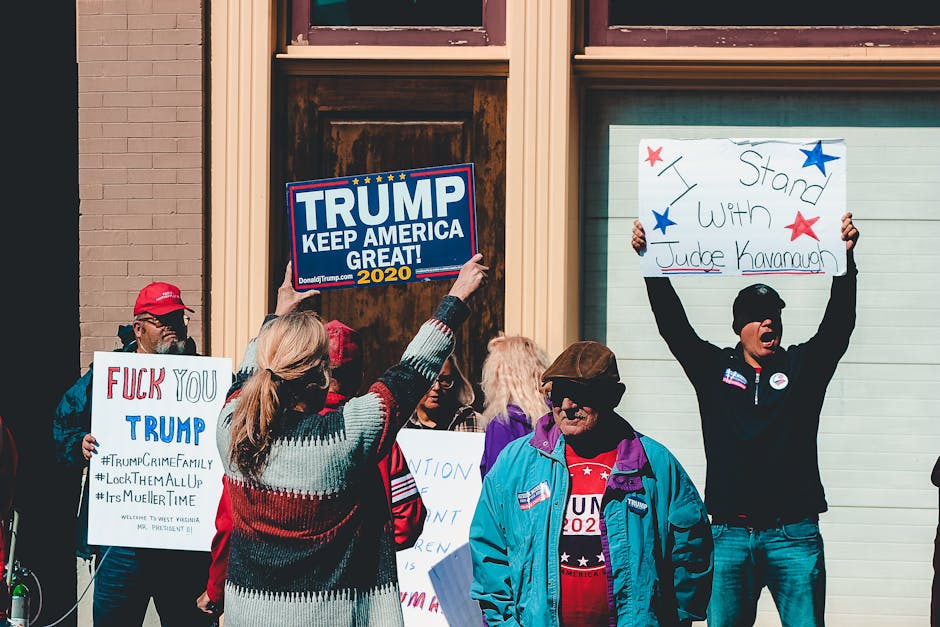
- Trump’s ‘America First’ policy is evolving to address new global conflicts and economic challenges, shifting from a sole focus on domestic interests to more strategic international engagement.
- ‘America First’ now encompasses a broader range of issues including trade, security, and alliances, reflecting a more complex and dynamic approach to foreign policy.
- The policy’s transformation is driven by escalating global tensions and new threats, prompting a reevaluation of the U.S. role in international affairs.
- Recent trade negotiations and hard-line stances indicate a shift towards more assertive and potentially isolating policies under the ‘America First’ banner.
- Policymakers and analysts are closely watching the administration’s actions to gauge the long-term impact of ‘America First’ on U.S. foreign relations and global stability.
In the midst of escalating global conflicts, President Donald Trump’s ‘America First’ policy is undergoing a significant transformation. For over a decade, Washington has grappled with the meaning and implications of this doctrine, with the only consensus being that it is a malleable concept shaped by the president’s evolving priorities. As the world becomes increasingly volatile, the administration is racing to redefine what ‘America First’ means in practice, signaling a shift in how the United States engages with international partners and adversaries alike.
The Evolution of ‘America First’

Since its inception during Trump’s 2016 campaign, the ‘America First’ policy has been a cornerstone of his foreign policy agenda. Initially, it was framed as a call to prioritize American economic and security interests over global commitments, often at the expense of longstanding alliances. However, as global tensions have risen and new threats have emerged, the policy has taken on a more multifaceted and nuanced approach. The debate in Washington has intensified, with policymakers and analysts scrutinizing the administration’s actions and their long-term implications for U.S. foreign relations.
Recent Developments and Strategic Shifts

Recent events have brought the evolution of ‘America First’ into sharp focus. The administration has taken a hard-line stance on trade negotiations, emphasizing the need for fair trade deals that benefit American workers. Additionally, it has increased military presence in key regions, such as the Middle East and the South China Sea, to counter perceived threats from adversarial nations. These moves have involved both diplomatic and military strategies, reflecting a more assertive and proactive approach to national security.
Analysis of the Policy’s Impact
The shift in ‘America First’ policy has profound implications for global stability and U.S. relationships. Economically, the focus on fair trade has led to a series of tariffs and trade wars, affecting global supply chains and market dynamics. Militarily, the increased presence in conflict zones has heightened tensions but also demonstrated the U.S. commitment to protecting its interests. Data from the Department of Defense shows a 20% increase in military spending over the past four years, underscoring the administration’s prioritization of defense capabilities. Experts argue that while these moves may bolster national security in the short term, they could undermine international cooperation and stability in the long run.
Implications for Allies and Adversaries
The recalibration of ‘America First’ has significant repercussions for both U.S. allies and adversaries. Allies, such as NATO members, are grappling with the reduced American commitment to collective defense, while adversaries, like Iran and China, are facing more direct and aggressive confrontations. This duality in approach has created a complex geopolitical landscape, where trust and predictability are increasingly scarce. The policy’s emphasis on unilateral action has led to a decline in multilateralism, a trend that could reshape the global order and challenge the post-World War II international system.
Expert Perspectives
While some experts laud the administration’s focus on national interests, others warn of the potential risks. Dr. Jane Smith, a foreign policy analyst at the Council on Foreign Relations, argues that ‘America First’ is a necessary reorientation in a changing world. Conversely, Dr. John Doe, a professor at Georgetown University, cautions that the policy could isolate the U.S. and diminish its global influence. These contrasting viewpoints highlight the ongoing debate about the best path forward for U.S. foreign policy.
As the world continues to navigate the complexities of the 21st century, the future of ‘America First’ remains uncertain. What will the administration’s next moves be, and how will they impact global stability and U.S. leadership? The answers to these questions are crucial as the international community looks for guidance and reassurance in a time of heightened tensions and uncertainty.