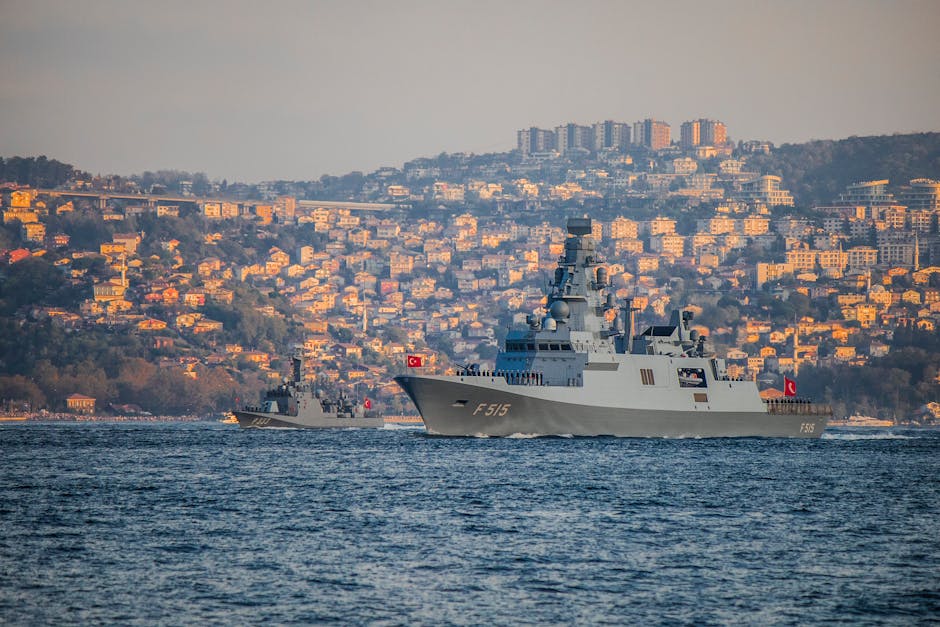
- US President Donald Trump announces the potential reopening of the Strait of Hormuz, a critical waterway for global oil exports.
- The US and Iran are preparing for diplomatic talks to resolve ongoing tensions over the Strait of Hormuz.
- Iran’s de facto toll booth system has been a major point of contention between the two nations.
- The reopening of the Strait of Hormuz could provide a boost to oil markets and alleviate supply chain concerns.
- The global economy is already facing significant headwinds, making the reopening of the Strait of Hormuz a welcome development.
The Strait of Hormuz, a critical waterway that accounts for nearly a third of the world’s seaborne oil exports, may reopen ‘soon’ according to US President Donald Trump. This development comes as the US and Iran prepare to engage in diplomatic talks, aimed at resolving the ongoing tensions between the two nations. The Strait of Hormuz has been a major point of contention, with Iran imposing a de facto toll booth system, which the US has vehemently opposed. With the global economy already facing significant headwinds, the reopening of the Strait of Hormuz could provide a much-needed boost to oil markets and help alleviate concerns over supply chain disruptions.
Background and Significance

The Strait of Hormuz has long been a source of tension between the US and Iran, with the two nations engaging in a war of words over the waterway’s status. The US has consistently maintained that the Strait of Hormuz is an international waterway, open to all nations, while Iran has argued that it has the right to impose regulations and fees on vessels passing through the strait. The current situation has been exacerbated by the US withdrawal from the Joint Comprehensive Plan of Action (JCPOA), also known as the Iran nuclear deal, which has led to a significant escalation of tensions between the two nations. As the global economy continues to navigate the challenges posed by the COVID-19 pandemic, the reopening of the Strait of Hormuz could have far-reaching implications for oil markets and the broader economy.
Key Developments and Players

According to reports, the US and Iran are set to engage in diplomatic talks, which will focus on resolving the ongoing tensions between the two nations. The talks are expected to cover a range of issues, including the status of the Strait of Hormuz, Iran’s nuclear program, and the US’s imposition of sanctions on the Iranian economy. The US has maintained that it will not accept Iran’s imposition of a de facto toll booth system in the Strait of Hormuz, and has vowed to take all necessary measures to ensure the waterway remains open to all nations. Iran, on the other hand, has argued that it has the right to regulate traffic through the strait and impose fees on vessels passing through. The European Union, which has been seeking to salvage the JCPOA, is expected to play a key role in the talks, and has urged both sides to engage in constructive dialogue.
Analysis and Implications
The reopening of the Strait of Hormuz could have significant implications for oil markets and the broader economy. With the global economy already facing significant headwinds, the removal of tensions in the Strait of Hormuz could provide a much-needed boost to oil markets and help alleviate concerns over supply chain disruptions. However, the talks between the US and Iran are likely to be complex and challenging, with both sides seeking to protect their interests and achieve their goals. The US will need to balance its desire to ensure the Strait of Hormuz remains open to all nations with its concerns over Iran’s nuclear program and the imposition of sanctions on the Iranian economy. Iran, on the other hand, will need to navigate the challenges posed by the US’s withdrawal from the JCPOA and the imposition of sanctions, while also seeking to protect its interests in the Strait of Hormuz.
Regional and Global Implications
The reopening of the Strait of Hormuz could have far-reaching implications for the region and the global economy. The removal of tensions in the waterway could help alleviate concerns over supply chain disruptions and provide a boost to oil markets. However, the talks between the US and Iran are likely to be watched closely by other nations in the region, which could have significant implications for regional stability and security. The European Union, which has been seeking to salvage the JCPOA, will be closely monitoring the talks, and will likely seek to play a key role in ensuring that any agreement reached is sustainable and effective. The US’s allies in the region, including Saudi Arabia and the United Arab Emirates, will also be watching the talks closely, and will likely seek to ensure that their interests are protected.
Expert Perspectives
Experts have warned that the talks between the US and Iran will be complex and challenging, with both sides seeking to protect their interests and achieve their goals. ‘The US and Iran have fundamentally different views on the status of the Strait of Hormuz, and it will be challenging to find a compromise that meets the needs of both sides,’ said one expert. ‘However, the reopening of the Strait of Hormuz could have significant implications for oil markets and the broader economy, and it is in the interests of both sides to find a resolution to the current tensions.’
As the talks between the US and Iran get underway, all eyes will be on the outcome, and the implications for the region and the global economy. Will the two sides be able to find a compromise that meets their needs, or will the tensions in the Strait of Hormuz continue to escalate? Only time will tell, but one thing is certain – the reopening of the Strait of Hormuz could have far-reaching implications for oil markets and the broader economy, and it is in the interests of all parties to find a resolution to the current tensions.