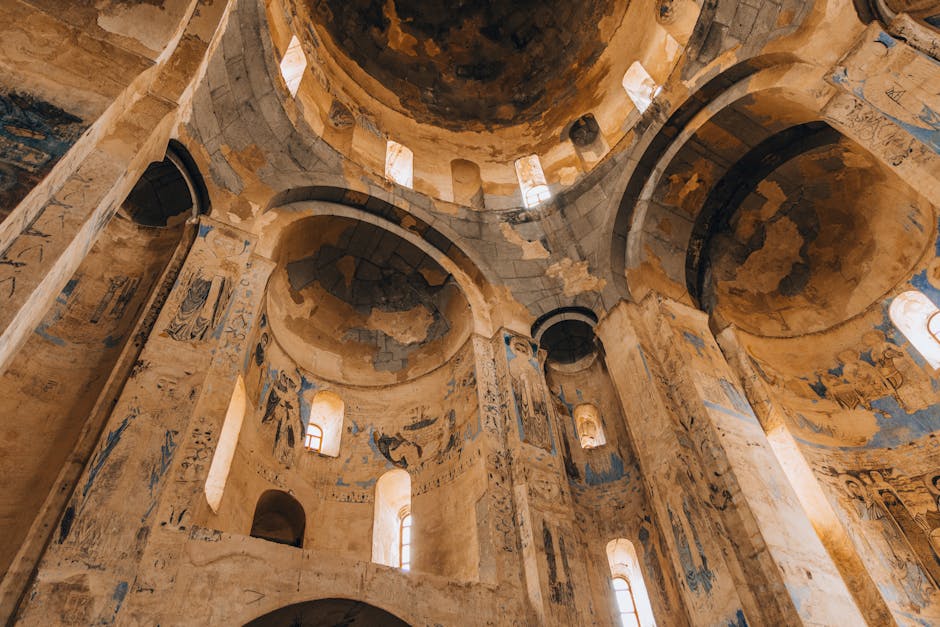
- A 1,500-year-old Byzantine church in Nahariya, Israel, was damaged in a rocket attack by Hezbollah, a Lebanon-based militant group.
- The attack highlights the devastating consequences of conflict on cultural heritage and ongoing tensions between Israel and its neighboring countries.
- The church’s intricate mosaics and ancient architecture make it a significant historical site, attracting tourists and historians worldwide.
- The incident raises questions about the protection of historical sites in conflict zones and the need for increased diplomacy.
- The damage to the church has sparked widespread concern among preservationists and historians, calling for increased efforts to protect historical sites.
The recent escalation of violence in the Middle East has resulted in significant damage to a 1,500-year-old Byzantine church in Nahariya, Israel. The church, a revered historical site, was hit during a barrage of rockets fired by Hezbollah, a Lebanon-based militant group. This incident underscores the devastating consequences of conflict on cultural heritage and the ongoing tensions between Israel and its neighboring countries. With the church’s intricate mosaics and ancient architecture, this attack has sparked widespread concern among preservationists and historians. The incident has also raised questions about the protection of historical sites in conflict zones and the need for increased diplomacy to prevent such incidents in the future.
Historical Significance of the Church

The 1,500-year-old Byzantine church in Nahariya is an integral part of Israel’s rich cultural heritage, attracting tourists and historians from around the world. The church’s stunning architecture and well-preserved mosaics provide a unique glimpse into the region’s complex history, with various empires and civilizations having left their mark over the centuries. The church’s significance extends beyond its historical value, as it also serves as a symbol of coexistence and tolerance in a region often plagued by conflict. As such, the damage inflicted upon this ancient site has been met with widespread condemnation, with many calling for increased efforts to protect historical sites from the ravages of war.
The Rocket Attack and Its Aftermath

Hezbollah’s rocket attack on northern Israel resulted in significant damage to the church, with reports indicating that the building’s structure has been compromised. The attack has been widely condemned by the international community, with many leaders calling for an immediate cessation of hostilities. The Israeli government has vowed to take all necessary measures to protect its citizens and historical sites, while also emphasizing the need for diplomacy to resolve the ongoing conflict. As the investigation into the attack continues, it has become clear that the damage to the church is not only a loss for Israel but also for the global community, which has been deprived of a significant cultural treasure.
Causes and Consequences of the Conflict
The ongoing conflict between Israel and Hezbollah is a complex issue, with deep-rooted historical, political, and religious factors at play. The region’s tumultuous history has created an environment in which tensions can escalate quickly, often with devastating consequences. Experts point to the need for a comprehensive and sustainable solution, one that addresses the underlying causes of the conflict and provides a framework for lasting peace. The damage to the 1,500-year-old church serves as a stark reminder of the human cost of war and the need for increased diplomacy to prevent such incidents in the future. As the international community continues to grapple with the challenges of conflict resolution, it is clear that a multifaceted approach will be necessary to address the complex issues at play.
Implications of the Attack
The attack on the Byzantine church has significant implications for the region, both in terms of cultural heritage and regional stability. The damage to the church has sparked widespread outrage, with many calling for increased protection of historical sites in conflict zones. The incident has also raised questions about the role of international organizations in preventing such attacks and the need for increased cooperation between countries to protect cultural heritage. As the region continues to navigate the complexities of conflict and diplomacy, it is clear that the protection of historical sites will be a critical issue, one that requires a concerted effort from the international community.
Expert Perspectives
Experts in the field of conflict resolution and cultural preservation have offered contrasting viewpoints on the attack, with some emphasizing the need for increased military action to protect historical sites, while others advocate for a more diplomatic approach. Dr. Maria Rodriguez, a leading expert in cultural preservation, noted that “the protection of historical sites requires a comprehensive approach, one that addresses the underlying causes of conflict and provides a framework for lasting peace.” In contrast, Dr. John Taylor, a specialist in conflict resolution, argued that “the international community must take a firm stance against attacks on cultural heritage sites, using all available means to prevent such incidents in the future.”
As the situation continues to unfold, it remains to be seen how the international community will respond to the attack on the Byzantine church. One thing is certain, however: the protection of cultural heritage sites will be a critical issue in the months and years to come, requiring a concerted effort from countries around the world to prevent such incidents and promote lasting peace in the region. The question on everyone’s mind is: what will be the next step in protecting these irreplaceable sites, and how will the international community come together to address this critical issue?