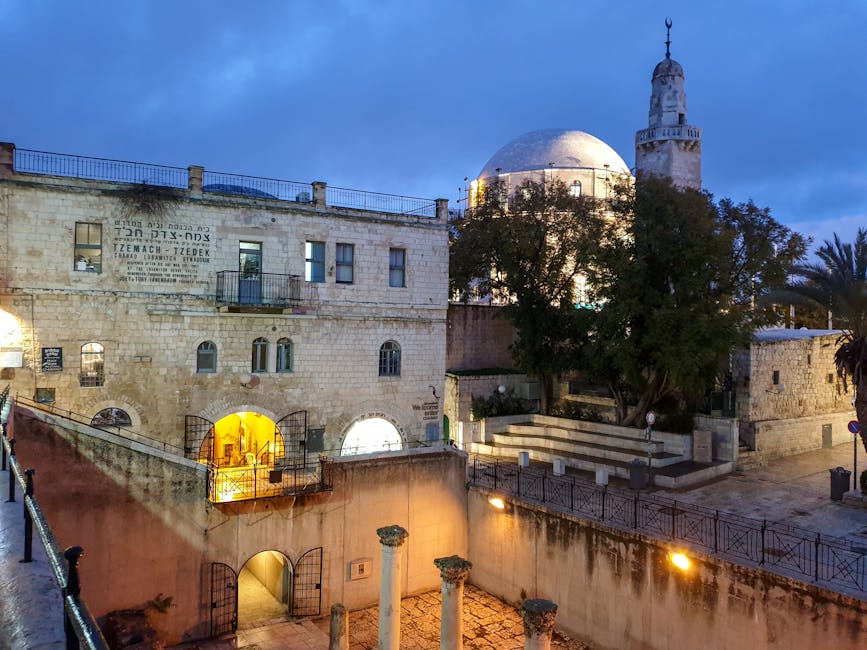
- Al-Aqsa Mosque reopened after a 40-day closure, sparking relief among the Muslim community.
- The mosque’s closure had been imposed by Israeli authorities following violent clashes between security forces and Palestinian protesters.
- The reopening marks a significant shift in the fragile status quo, but underlying issues remain to be addressed.
- Thousands of worshippers flocked to Al-Aqsa Mosque for the first Friday prayers since its reopening.
- The closure had been the longest in recent memory, with far-reaching impacts beyond Israel and Palestine.
The reopening of Al-Aqsa Mosque has sent a wave of relief across the Muslim community, as thousands of worshippers flocked to the holy site for the first Friday prayers in over a month. The mosque, which is considered the third-holiest site in Islam, had been closed for 40 days by Israeli authorities, sparking widespread outrage and concerns about religious freedom. The closure had been imposed following a series of violent clashes between Israeli security forces and Palestinian protesters, but its reopening marks a significant shift in the fragile status quo.
Background to the Closure

The closure of Al-Aqsa Mosque had been a highly contentious issue, with many in the Muslim world viewing it as an attack on their religious rights. The mosque, which is located in the heart of Jerusalem’s Old City, is a highly sensitive site, and any changes to its status quo are closely watched by the international community. The 40-day closure had been the longest in recent memory, and its impact had been felt far beyond the borders of Israel and Palestine. The reopening of the mosque is seen as a significant step towards reducing tensions in the region, but it remains to be seen whether it will be enough to address the underlying issues that led to the closure in the first place.
The Reopening: What Happened

Thousands of Muslims performed Friday prayers at Al-Aqsa Mosque, marking a triumphant return to the holy site after a 40-day absence. The prayers were held without major incident, despite concerns that the reopening could spark further violence. The Israeli authorities had imposed strict security measures, including checkpoints and metal detectors, to prevent any disruptions to the prayers. The worshippers, who had been eager to return to the mosque, were relieved to be able to perform their prayers in peace, and the atmosphere was one of joy and celebration. The reopening of the mosque has been seen as a significant concession by the Israeli authorities, and it remains to be seen how it will impact the wider conflict.
Analysis: Causes and Effects
The reopening of Al-Aqsa Mosque is a complex issue, with multiple factors at play. The closure had been imposed in response to a series of violent clashes between Israeli security forces and Palestinian protesters, but it had also been seen as a highly provocative move by the Israeli authorities. The reopening is likely to be viewed as a significant victory for the Palestinian leadership, which had been lobbying intensively for the mosque to be reopened. However, it also raises questions about the long-term stability of the region, and whether the reopening will be enough to address the underlying issues that led to the closure in the first place. The international community will be watching closely to see how the situation develops, and whether the reopening of the mosque marks a significant shift in the conflict.
Implications: Who is Affected
The reopening of Al-Aqsa Mosque has significant implications for the Muslim community, both in Israel and Palestine and around the world. The mosque is a highly symbolic site, and its closure had been seen as an attack on Muslim religious rights. The reopening is likely to be viewed as a major relief, but it also raises questions about the long-term security of the site. The Israeli authorities will need to balance the need to maintain security with the need to respect the religious rights of the Muslim community, and it remains to be seen how they will achieve this. The reopening of the mosque also has significant implications for the wider conflict, and whether it will be enough to reduce tensions in the region.
Expert Perspectives
Experts are divided on the implications of the reopening of Al-Aqsa Mosque, with some viewing it as a significant step towards reducing tensions in the region, while others see it as a temporary concession by the Israeli authorities. Some have warned that the reopening could spark further violence, while others believe that it marks a significant shift in the conflict. According to Dr. Khalil Shikaki, a leading expert on the Israeli-Palestinian conflict, the reopening of the mosque is a significant development, but it is unlikely to address the underlying issues that led to the closure in the first place. “The reopening of the mosque is a positive step, but it is only one part of a much larger puzzle,” he said.
As the situation continues to evolve, it remains to be seen what the long-term implications of the reopening of Al-Aqsa Mosque will be. Will it mark a significant shift in the conflict, or will it be a temporary concession by the Israeli authorities? One thing is certain, however: the reopening of the mosque has sent a wave of relief across the Muslim community, and it will be closely watched by the international community in the days and weeks to come. The key question now is what will happen next, and whether the reopening of the mosque will be enough to reduce tensions in the region and pave the way for a lasting peace.