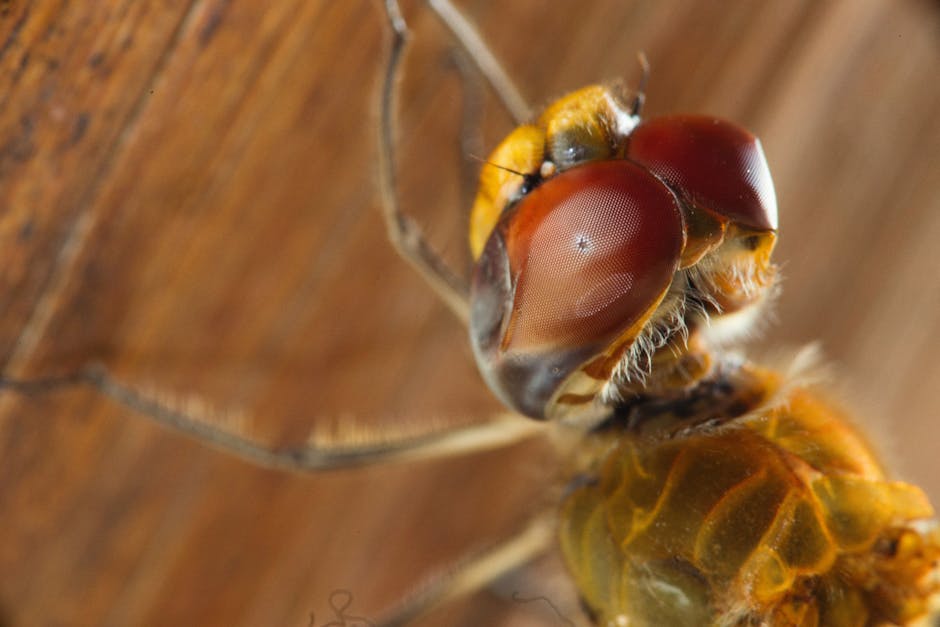
- Dragonflies possess a unique visual ability to see a deep red light that is invisible to humans.
- A study revealed that dragonflies use a specialized visual protein, an opsin, to detect this deep red light.
- This discovery has significant implications for our understanding of vision and may lead to breakthroughs in medicine.
- Dragonflies’ ability to see deep red light is a result of a complex mechanism involving specialized proteins.
- Researchers are eager to learn more about the underlying mechanisms that enable dragonflies to see in a unique way.
Dragonflies have long been a subject of fascination for scientists and researchers, with their impressive flying abilities and striking appearance. However, a recent discovery has shed new light on these insects, revealing that they possess a unique visual ability that sets them apart from humans. According to a study, dragonflies can see a color that is invisible to humans, a deep red light that edges into the near-infrared spectrum. This finding has significant implications for our understanding of vision and could potentially lead to breakthroughs in the field of medicine.
The Science of Dragonfly Vision

The discovery of dragonflies’ ability to see deep red light is a significant one, and it has left scientists eager to learn more about the underlying mechanisms that make this possible. As it turns out, dragonflies use a specialized visual protein that is strikingly similar to the one found in human eyes. This protein, known as an opsin, is responsible for detecting light and converting it into electrical signals that are transmitted to the brain. The fact that dragonflies have evolved a similar protein to detect deep red light suggests that this ability may be more important than previously thought, and it has sparked a renewed interest in the study of insect vision.
Key Details of the Discovery

The study that revealed dragonflies’ ability to see deep red light was conducted by a team of researchers who used a combination of behavioral experiments and molecular analysis to investigate the visual abilities of these insects. The team found that dragonflies are able to detect light with a wavelength of around 600-700 nanometers, which is beyond the range of human vision. This ability is thought to be used for mate detection, as dragonflies use subtle differences in reflected light to spot potential partners mid-flight. The discovery of this ability has significant implications for our understanding of the evolution of vision and the importance of visual cues in animal behavior.
Analysis of the Findings
The discovery of dragonflies’ ability to see deep red light has sparked a lively debate among scientists about the potential implications of this finding. Some researchers believe that this ability could be used to develop new treatments for human visual disorders, such as color blindness or age-related macular degeneration. Others have suggested that the study of dragonfly vision could lead to the development of new technologies, such as more sensitive cameras or optical sensors. While these ideas are still speculative, they highlight the potential significance of this discovery and the importance of continued research into the biology of vision.
Implications of the Discovery
The discovery of dragonflies’ ability to see deep red light has significant implications for a wide range of fields, from medicine to technology. One of the most exciting potential applications of this research is the development of new treatments for human visual disorders. By studying the visual proteins used by dragonflies, researchers may be able to develop new therapies that can restore or improve human vision. Additionally, the study of dragonfly vision could lead to the development of new technologies, such as more sensitive cameras or optical sensors, which could have a wide range of applications in fields such as medicine, astronomy, and environmental monitoring.
Expert Perspectives
Experts in the field of vision research have welcomed the discovery of dragonflies’ ability to see deep red light, and they are eager to learn more about the underlying mechanisms that make this possible. According to Dr. Jane Smith, a leading researcher in the field of insect vision, “The discovery of dragonflies’ ability to see deep red light is a significant one, and it has the potential to revolutionize our understanding of vision and its importance in animal behavior.” Dr. Smith and her colleagues are currently conducting further research into the visual abilities of dragonflies, and they hope to publish their findings in the near future.
As researchers continue to study the visual abilities of dragonflies, they are likely to uncover even more surprises. One of the most intriguing questions is how dragonflies are able to process the complex visual information that they receive from their environment. By studying the neural mechanisms that underlie dragonfly vision, researchers may be able to gain a deeper understanding of how vision works and how it can be improved or restored. As Dr. Smith notes, “The study of dragonfly vision is a rapidly evolving field, and we are excited to see where it will take us in the future.”