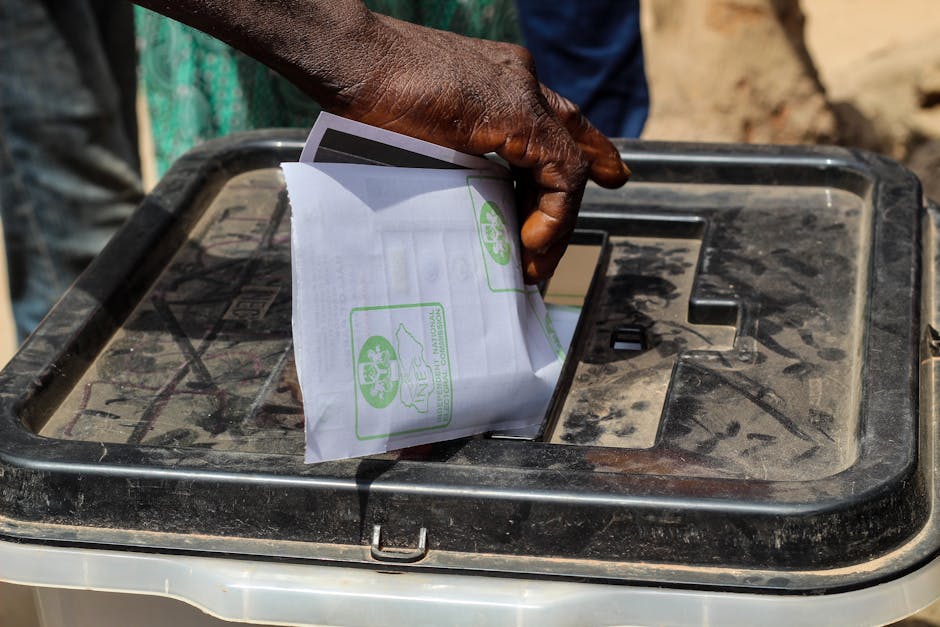
- Benin’s incumbent President Patrice Talon will step down after a decade in power, paving the way for a new leader to take the reins.
- The country is bracing itself for a significant transition of power with 8 million voters eligible to cast their ballots.
- The election will determine the country’s future, with implications for the region and beyond.
- Benin’s journey to democracy has been marked by significant milestones, including its transition to a multi-party democracy in the 1990s.
- The election will test the country’s ability to transfer power peacefully and democratically.
As Benin prepares to head to the polls on Sunday, the country is bracing itself for a significant transition of power. After a decade at the helm, incumbent President Patrice Talon will step down, paving the way for a new leader to take the reins. The favourite to win is the current finance minister, who will face off against a slew of other candidates in a bid to become the country’s next president. With over 8 million voters eligible to cast their ballots, the stakes are high, and the outcome is far from certain. The election will not only determine the country’s future but also have significant implications for the region and beyond.
The Road to Democracy

Benin’s journey to democracy has been marked by significant milestones, including the country’s transition from a socialist state to a multi-party democracy in the 1990s. Since then, the country has made notable progress in consolidating its democratic institutions and promoting economic growth. However, the upcoming election is crucial, as it will test the country’s ability to transfer power peacefully and democratically. The fact that President Talon is stepping down voluntarily is a significant development, as it sets a positive precedent for the region. Nevertheless, the election is not without its challenges, and the country’s voters will be watching closely to ensure that the process is free, fair, and transparent.
The Candidates and Their Platforms

The finance minister, who is widely seen as the frontrunner, has campaigned on a platform of economic development and job creation. The minister has promised to build on the country’s economic progress, leveraging its strategic location and natural resources to drive growth and investment. Other candidates have focused on issues such as education, healthcare, and corruption, highlighting the need for improved public services and greater accountability. As the candidates engage with voters, they are being scrutinized for their policies, track records, and ability to lead the country forward. The election commission has also been working to ensure that the voting process is smooth, with measures in place to prevent fraud and irregularities.
Analysis and Implications
The outcome of the election will have significant implications for Benin and the wider region. A peaceful and democratic transfer of power will send a positive signal to investors and international partners, potentially unlocking new opportunities for economic cooperation and development. On the other hand, any disruptions or irregularities could undermine the country’s stability and undermine its democratic credentials. The election will also be closely watched by regional organizations, such as the Economic Community of West African States (ECOWAS), which has been actively promoting democratic governance and stability in the region. As the country navigates this critical juncture, it is essential that all stakeholders, including the government, opposition parties, and civil society, work together to ensure a smooth transition and a positive outcome.
The Human Impact
The election will have a direct impact on the lives of Benin’s citizens, who are eager for improved living standards, better public services, and greater economic opportunities. The country’s youthful population, in particular, is looking for a leader who can create jobs, promote entrepreneurship, and provide access to quality education and healthcare. As the candidates make their final pitches, they are being judged on their ability to deliver on these expectations and provide a vision for the country’s future. The election is also an opportunity for women and marginalized groups to make their voices heard, and to demand greater representation and inclusion in the country’s political and economic life.
Expert Perspectives
According to experts, the election is a critical test of Benin’s democratic institutions and its ability to manage a peaceful transfer of power. Some analysts have cautioned that the election could be marred by irregularities or disputes, particularly if the outcome is close or contested. Others have emphasized the need for international observers and support to ensure that the process is free and fair. As the world watches, it is clear that the stakes are high, and the outcome will have significant implications for the country, the region, and beyond.
Looking ahead, the key question is what the future holds for Benin and its people. Will the country be able to build on its democratic progress, or will it face new challenges and setbacks? As the voters make their decision, they are not only choosing a new leader but also shaping the country’s destiny and its place in the world. The international community will be watching closely, eager to see whether Benin can emerge as a beacon of democracy and stability in a region that has often been marked by turmoil and uncertainty.