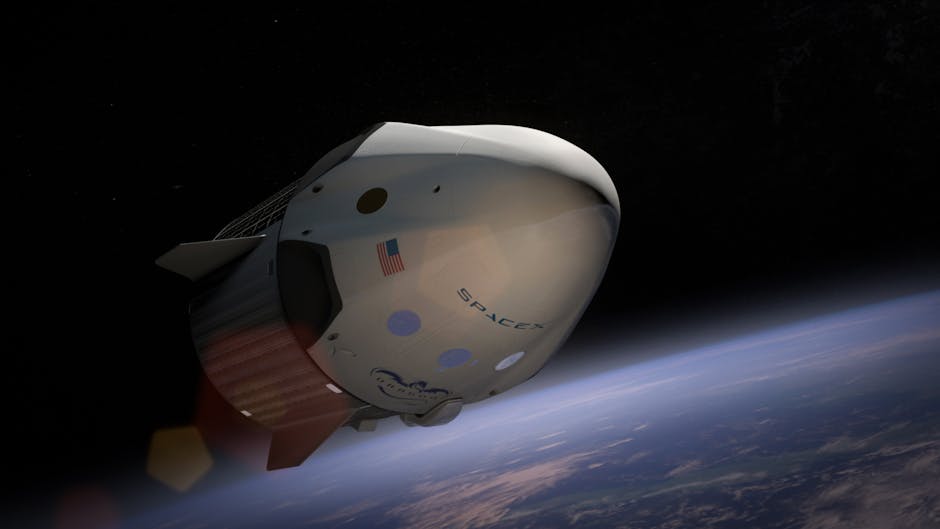
- The Artemis II mission has successfully completed its maiden voyage around the Moon, marking a crucial step towards NASA’s lunar surface return goal by 2025.
- Astronauts will undergo rigorous medical checks to assess physical and mental effects of their journey.
- NASA will analyze vast amounts of data collected during the mission to prepare for next phase of lunar exploration.
- Post-flight procedures are essential to refine strategies, address technical issues, and optimize spacecraft performance.
- Lessons learned from Artemis II will play a vital role in shaping success of subsequent missions.
The Artemis II mission has successfully completed its maiden voyage around the Moon, marking a crucial step towards NASA’s ambitious goal of returning humans to the lunar surface by 2025. As the astronauts touch down on Earth, they will undergo a series of rigorous medical checks to assess the physical and mental effects of their journey. This is a critical phase of the mission, as scientists seek to understand how space travel affects the human body and develop strategies to mitigate any adverse effects. With the Artemis II crew’s safe return, NASA can now focus on analyzing the vast amounts of data collected during the mission and preparing for the next phase of lunar exploration.
Post-Flight Procedures

The astronauts will be reunited with their families, providing a much-needed emotional boost after their prolonged absence. The reunion will be a poignant moment, as the astronauts readjust to life on Earth and reconnect with their loved ones. Meanwhile, NASA’s team of scientists and engineers will be busy poring over the mission data, conducting debriefings, and performing routine maintenance on the spacecraft. The post-flight procedures are an essential part of the mission, as they enable NASA to refine its strategies, address any technical issues, and optimize the performance of the spacecraft. As the space agency looks to the future, the lessons learned from Artemis II will play a vital role in shaping the success of subsequent missions.
Mission Highlights

The Artemis II mission was a groundbreaking achievement, marking the first time a crewed spacecraft has flown around the Moon in over 50 years. The mission was crewed by a team of four astronauts, who spent several days in space, conducting a series of experiments and gathering valuable data on the lunar environment. The spacecraft performed flawlessly, demonstrating the reliability and capabilities of NASA’s Orion vehicle. The mission also marked an important milestone in the development of the Space Launch System (SLS) rocket, which will be used for future lunar missions. As the Artemis program continues to gain momentum, the success of Artemis II has provided a significant boost to NASA’s plans for lunar exploration.
Analysis and Implications
The Artemis II mission has far-reaching implications for the future of space exploration. The data collected during the mission will be used to inform the development of future lunar missions, including the Artemis III mission, which is scheduled to land humans on the lunar surface in 2025. The mission has also demonstrated the feasibility of long-duration spaceflight, paving the way for more ambitious missions to Mars and beyond. Furthermore, the success of Artemis II has highlighted the importance of international cooperation in space exploration, with NASA collaborating with space agencies around the world to achieve its goals. As the space agency looks to the future, the Artemis II mission will be remembered as a pivotal moment in the history of space exploration.
Looking Ahead
The Artemis II astronauts will now undergo a period of rehabilitation and readjustment, as they recover from the physical and mental demands of their mission. The astronauts will also be involved in a series of debriefings and public outreach events, sharing their experiences and insights with the public. Meanwhile, NASA will be focused on preparing for the next phase of lunar exploration, including the development of new spacecraft and technologies. The Artemis program is a long-term commitment to lunar exploration, with plans to establish a sustainable human presence on the lunar surface. As the space agency looks to the future, the success of Artemis II has provided a significant boost to its plans for lunar exploration and beyond.
Expert Perspectives
According to Dr. Maria Zuber, NASA’s Associate Administrator for the Science Mission Directorate, the Artemis II mission has been a resounding success, demonstrating the capabilities of the Orion spacecraft and the SLS rocket. Dr. Zuber noted that the mission has provided valuable insights into the effects of space travel on the human body and has paved the way for future lunar missions. In contrast, some experts have raised concerns about the cost and complexity of the Artemis program, arguing that the resources could be better spent on other priorities. Despite these concerns, the success of Artemis II has provided a significant boost to NASA’s plans for lunar exploration, and the space agency remains committed to its goal of returning humans to the lunar surface by 2025.
As the Artemis II astronauts look to the future, they will be watching with interest as NASA prepares for the next phase of lunar exploration. The Artemis III mission, scheduled to launch in 2025, will be a major milestone in the program, marking the first time humans have visited the lunar surface since the Apollo era. The mission will be crewed by a team of astronauts, who will spend several days on the lunar surface, conducting scientific experiments and gathering data. As the space agency looks to the future, the success of Artemis II has provided a significant boost to its plans for lunar exploration, and the Artemis III mission is set to be an historic achievement in the annals of space exploration.