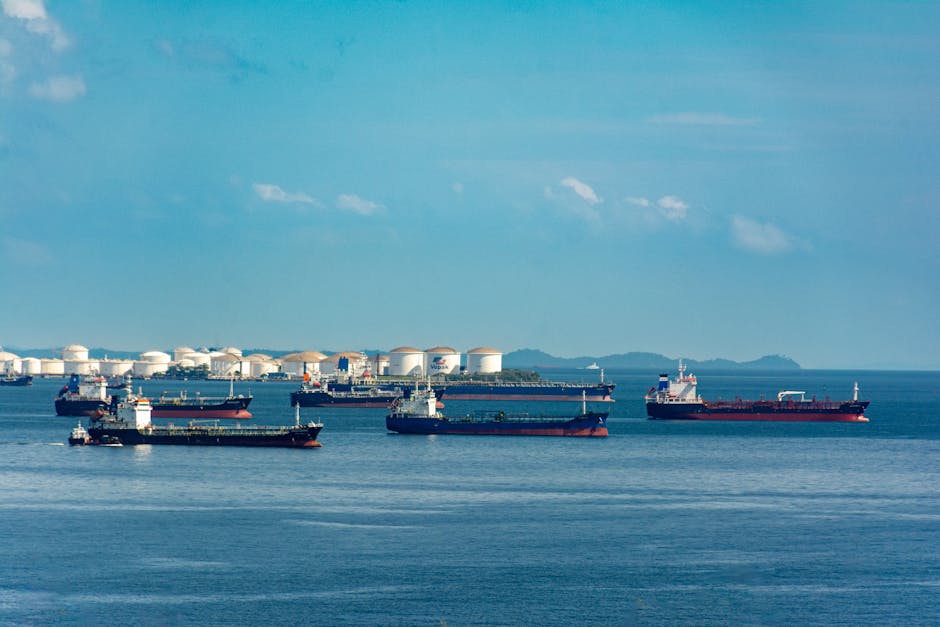
- The Strait of Hormuz is a critical waterway, carrying nearly 20% of the world’s oil and connecting the Persian Gulf to the Arabian Sea.
- The strait is a highly strategic location, bounded by Iran to the north and the United Arab Emirates and Oman to the south.
- The Strait of Hormuz is a vital conduit for global energy supplies, with the world’s largest oil-producing countries relying on it for exports.
- Iran continues to exert significant control over traffic in the region, forcing countries to negotiate deals with potential consequences.
- The situation in the Strait of Hormuz has far-reaching implications for global trade, diplomacy, and the balance of power in the Middle East.
The Strait of Hormuz, a critical waterway connecting the Persian Gulf to the Arabian Sea, has long been a flashpoint in international relations. Recently, it was reported that nearly 20% of the world’s oil passes through this narrow strait, making it a vital conduit for global energy supplies. Despite a cease-fire, Iran continues to exert significant control over traffic in the region, forcing countries to negotiate deals that could potentially put them at odds with the United States. This complex situation has far-reaching implications for global trade, diplomacy, and the balance of power in the Middle East.
The Strategic Importance of the Strait of Hormuz

The Strait of Hormuz is not just a critical waterway for oil exports; it is also a highly strategic location that has been the focus of international attention for decades. The strait is bounded by Iran to the north and the United Arab Emirates and Oman to the south, making it a pivotal point for regional security and global trade. With the world’s largest oil-producing countries, including Saudi Arabia, Iraq, and Kuwait, relying on the strait to export their oil, any disruption to traffic in the region can have significant consequences for the global economy. As a result, the strait has become a focal point for international diplomacy, with countries seeking to balance their interests and maintain stability in the region.
Iran’s Grip on the Strait

Despite the cease-fire, Iran has continued to maintain a strong grip on the Strait of Hormuz, with its naval forces patrolling the waterway and controlling access to the region. This has forced countries seeking to use the strait to negotiate deals with Iran, which can be a complex and challenging process. For example, China, which is one of the largest importers of oil from the region, has been seeking to increase its influence in the strait and has negotiated a series of agreements with Iran to secure its oil supplies. Similarly, the European Union has also been seeking to strengthen its ties with Iran and has launched a series of initiatives aimed at promoting stability and security in the region.
Analysis of the Situation
The situation in the Strait of Hormuz is complex and multifaceted, with a range of factors contributing to the tensions in the region. One key issue is the ongoing rivalry between Iran and the United States, which has been a major source of instability in the region. The US has imposed a range of sanctions on Iran, including restrictions on its oil exports, which has had a significant impact on the country’s economy. In response, Iran has sought to increase its influence in the region and has developed close ties with other countries, including China and Russia. The situation has also been complicated by the involvement of other regional actors, including Saudi Arabia and the United Arab Emirates, which have their own interests and agendas in the region.
Implications for Global Trade
The situation in the Strait of Hormuz has significant implications for global trade, with any disruption to traffic in the region having the potential to impact oil prices and the global economy. The strait is a critical conduit for oil exports from the Middle East, and any blockage or disruption to traffic could have far-reaching consequences. For example, in 2019, attacks on oil tankers in the strait led to a significant increase in oil prices, which had a major impact on the global economy. As a result, countries are seeking to diversify their oil supplies and reduce their reliance on the strait, which could have significant implications for the global energy market.
Expert Perspectives
Experts have differing views on the situation in the Strait of Hormuz, with some arguing that the region is likely to remain a source of instability and tension in the coming years. According to Dr. Sanam Vakil, a specialist on Middle East politics at Chatham House, “the Strait of Hormuz is a critical waterway that is likely to remain a flashpoint in international relations. The situation is complex and multifaceted, and it will require careful diplomacy and negotiation to resolve.” In contrast, other experts argue that the situation in the strait is not as dire as it seems, and that countries are working to find solutions to the region’s problems. For example, according to Dr. Kenneth Katzman, a specialist on Middle East politics at the Congressional Research Service, “while the situation in the Strait of Hormuz is certainly challenging, it is not insurmountable. With careful diplomacy and negotiation, it is possible to find solutions that meet the needs of all parties involved.”
Looking to the future, it is clear that the situation in the Strait of Hormuz will remain a major focus of international attention in the coming years. As countries continue to navigate the complex web of alliances and rivalries in the region, it is likely that the strait will remain a source of tension and instability. However, it is also possible that countries will find ways to work together to address the region’s problems and promote stability and security in the strait. One key question is whether the US and Iran will be able to find a way to resolve their differences and work towards a more stable and secure region, or whether the tensions between them will continue to escalate. As the situation continues to evolve, it will be important to watch for any signs of progress or deterioration in the region, and to consider the potential implications for global trade and geopolitics.