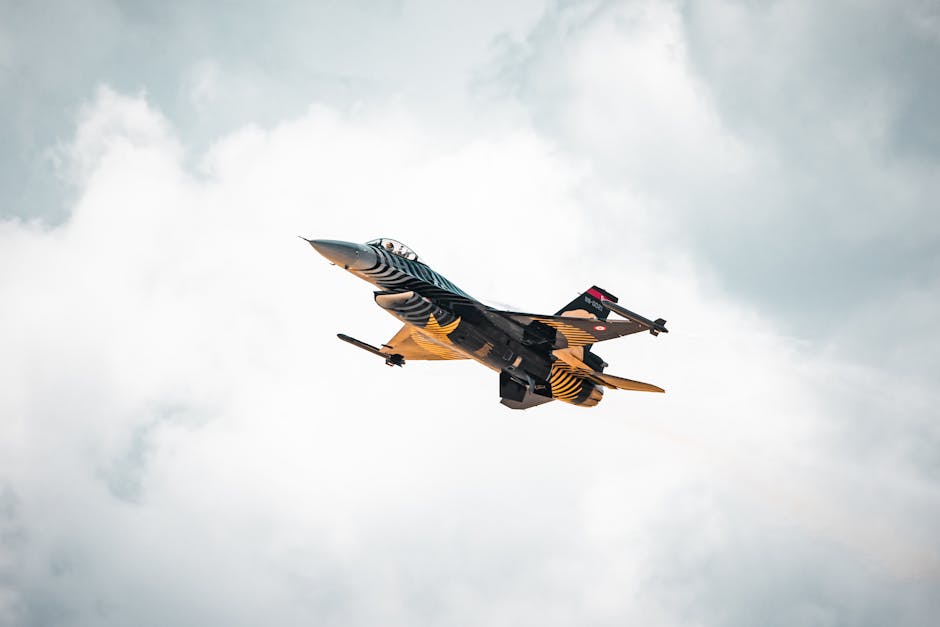
- The global fighter-jet market is projected to reach $400 billion by 2030, with the Global Combat Air Programme at the forefront.
- Italy has joined Saudi Arabia’s bid to join the Global Combat Air Programme, which already includes the U.K. and Japan.
- The programme aims to develop a new stealth fighter with supersonic capability, set to be deployed by 2035.
- The Global Combat Air Programme brings together leading defense manufacturers and governments for international cooperation.
- The addition of Saudi Arabia will bolster the programme’s global reach and emphasize growing importance of international defense cooperation.
As the global defense landscape continues to evolve, a striking statistic has emerged: the international fighter-jet market is projected to reach $400 billion by 2030, with the Global Combat Air Programme at the forefront of this trend. Italy has now thrown its weight behind Saudi Arabia’s bid to join this prestigious initiative, which already counts the U.K., Italy, and Japan as partners. The programme aims to develop a new stealth fighter with supersonic capability, set to take to the skies by 2035. This development is poised to have far-reaching implications for the global defense industry and the economies of participating nations.
The Global Combat Air Programme: A New Era of Cooperation

The Global Combat Air Programme is a landmark initiative that brings together leading defense manufacturers and governments from around the world. The programme’s primary objective is to design, develop, and deploy a next-generation fighter jet, one that will surpass current capabilities in terms of stealth, speed, and firepower. With Italy, the U.K., and Japan already on board, the addition of Saudi Arabia would not only bolster the programme’s global reach but also underscore the growing importance of international cooperation in defense technology. As the world grapples with emerging security challenges, such collaborative efforts are becoming increasingly vital, making this development a matter of considerable interest and relevance in the current geopolitical climate.
Saudi Arabia’s Bid: Key Details and Implications

According to recent statements, Italian Prime Minister Giorgia Meloni has expressed support for Saudi Arabia’s entry into the Global Combat Air Programme. This move is seen as a strategic decision, reflecting the deepening ties between Italy and Saudi Arabia, as well as the latter’s increasing role in global defense affairs. The partnership would enable Saudi Arabia to leverage cutting-edge technology and expertise from the programme’s existing members, potentially enhancing its military capabilities and contributing to the regional balance of power. Meanwhile, for the programme itself, Saudi Arabia’s participation would introduce new resources, markets, and geopolitical perspectives, further solidifying the initiative’s position as a premier international defense collaboration.
Analysis: Causes, Effects, and Expert Insights
The decision to support Saudi Arabia’s entry into the Global Combat Air Programme can be analyzed through the lens of geopolitical strategy, economic interests, and the evolving nature of international defense cooperation. Experts point out that this development is part of a broader trend where nations are seeking to pool their resources and expertise to develop high-cost, high-tech military systems. The inclusion of Saudi Arabia would not only expand the programme’s financial and technological base but also reflect the shifting dynamics of global alliances and defense priorities. Furthermore, the programme’s focus on next-generation fighter jets underscores the ongoing race for superiority in air power, a critical component of modern military capability. Data suggests that investments in such advanced defense technologies can have significant spin-off benefits for local economies and industries, making this a strategic move with potential long-term advantages for all parties involved.
Implications for Global Defense and Economy
The implications of Saudi Arabia joining the Global Combat Air Programme are multifaceted, affecting not only the global defense landscape but also the economies of participating nations. The development of a new stealth fighter jet by 2035 would place the programme’s members at the forefront of military technology, potentially altering the balance of power in various regions. Moreover, the economic implications are considerable, with the programme expected to generate significant investments, jobs, and innovation opportunities across the defense and aerospace sectors. As the programme progresses, it will be crucial to monitor how these developments impact global security, trade, and cooperation, particularly in light of the complex geopolitical environment of the 21st century.
Expert Perspectives
Experts in the field of defense and international relations have offered contrasting viewpoints on the implications of Saudi Arabia’s potential entry into the Global Combat Air Programme. Some analysts view this development as a positive step towards greater international cooperation and a more stable Middle East, highlighting the potential for shared technological advancements and interoperability. Others, however, express concerns about the programme’s potential to exacerbate regional arms races and the challenges of integrating Saudi Arabia’s military capabilities with those of the existing partners. These differing perspectives underscore the complexity of the issue and the need for careful consideration of both the strategic and economic dimensions of this budding partnership.
Looking forward, the key question on the minds of observers is what the future holds for the Global Combat Air Programme, especially with the potential inclusion of new members like Saudi Arabia. As the programme navigates the challenges of developing a next-generation fighter jet, it will be essential to watch for signs of technological breakthroughs, shifts in the geopolitical landscape, and the economic outcomes of this significant international collaboration. The open question remains how this initiative will influence the broader trends in global defense, international cooperation, and the economies of the nations involved, making the Global Combat Air Programme a development worthy of continued attention and analysis in the years to come.