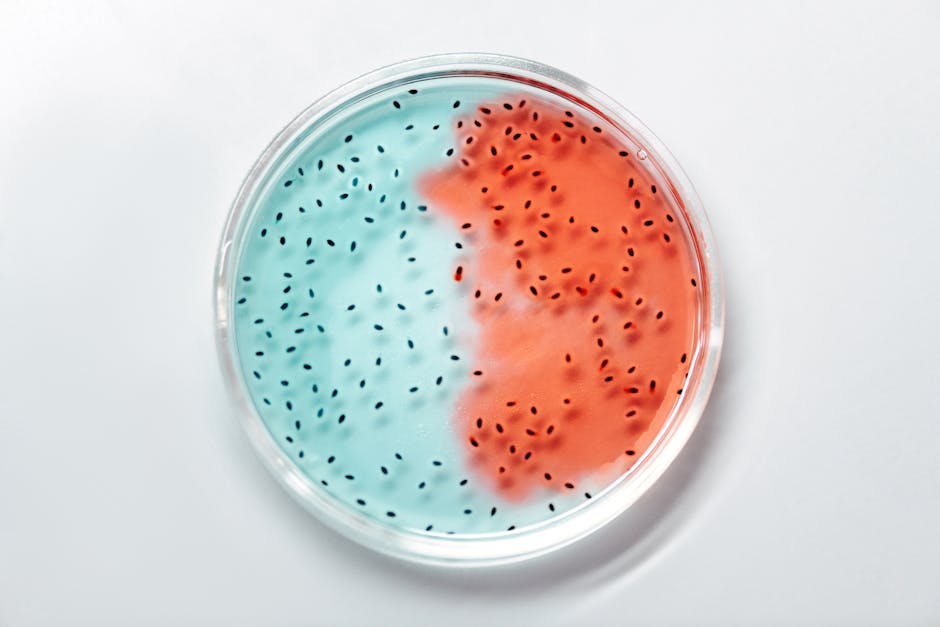
- Certain bacteria can generate enough force to spin small, 3D-printed discs without physically touching them.
- This phenomenon has significant implications for the development of tiny motors and micro-scale machines.
- The ability of bacterial locomotion has been overlooked, but it has vast potential for novel applications.
- The discovery could pave the way for novel applications in fields such as medicine, robotics, and materials science.
- Scientists are uncovering innovative ways to leverage bacteria for various applications and microorganisms.
A striking discovery in the field of microbiology has revealed that certain bacteria can generate enough force to spin small, 3D-printed discs, or ‘pucks,’ without physically touching them. This phenomenon, made possible by a previously overlooked aspect of bacterial locomotion, has significant implications for the development of tiny motors and other micro-scale machines. According to a recent study published in the journal Nature, this innovative approach could pave the way for novel applications in fields such as medicine, robotics, and materials science.
Understanding Bacterial Locomotion

The ability of bacteria to move and interact with their environment is a complex process that has been studied extensively in recent years. However, the discovery that certain microbes can harness their locomotion capabilities to power tiny motors has brought new attention to this field. As scientists continue to explore the properties and behaviors of bacteria, they are uncovering innovative ways to leverage these microorganisms for various applications. The fact that bacteria can spin ‘pucks’ without touching them highlights the vast potential of microbial power and its potential to transform various industries.
The Science Behind the Spin

Researchers have found that the key to this phenomenon lies in the way bacteria move and interact with their surroundings. By using 3D-printed discs with specific designs and textures, scientists can create an environment that allows bacteria to generate enough force to spin the ‘pucks.’ This process is made possible by the collective motion of multiple bacteria, which work together to create a synchronized movement that can be harnessed to power tiny motors. The discovery of this mechanism has opened up new avenues for research and development, as scientists seek to understand the underlying principles and optimize the performance of these microbial systems.
Analyzing the Implications
A closer examination of the data and expert opinions reveals that the ability of bacteria to spin ‘pucks’ without touching them has far-reaching implications for various fields. From a technical standpoint, this discovery could lead to the development of more efficient and sustainable micro-scale machines, such as robotic systems and medical devices. Furthermore, the use of microbial power could reduce the environmental impact of these machines, making them more appealing for applications where energy efficiency is crucial. As researchers continue to explore the properties and capabilities of bacteria, they may uncover even more innovative ways to harness microbial power and transform various industries.
Broader Implications and Applications
The fact that bacteria can spin ‘pucks’ without touching them has significant implications for various stakeholders, including researchers, industries, and the general public. As scientists continue to develop and refine this technology, they may create new opportunities for collaboration and innovation across disciplines. The potential applications of microbial power are vast, ranging from medical devices and robotic systems to materials science and environmental monitoring. As the field continues to evolve, it is likely that we will see new and innovative uses of bacterial locomotion, leading to breakthroughs and advancements in various areas of research and development.
Expert Perspectives
Experts in the field of microbiology and materials science have offered contrasting viewpoints on the discovery, highlighting both the potential benefits and challenges of harnessing bacterial power. While some scientists see this as a groundbreaking opportunity to develop sustainable and efficient micro-scale machines, others have raised concerns about the scalability and reliability of these systems. As researchers continue to explore and debate the implications of this discovery, they will need to address these challenges and develop innovative solutions to overcome them.
Looking ahead, the discovery that bacteria can spin ‘pucks’ without touching them raises important questions about the future of microbial power and its potential applications. As scientists continue to push the boundaries of this technology, they will need to consider the ethical, environmental, and societal implications of their work. What are the potential risks and benefits of harnessing bacterial power, and how can researchers ensure that this technology is developed and used responsibly? These are just a few of the open questions that will need to be addressed as the field continues to evolve and mature.