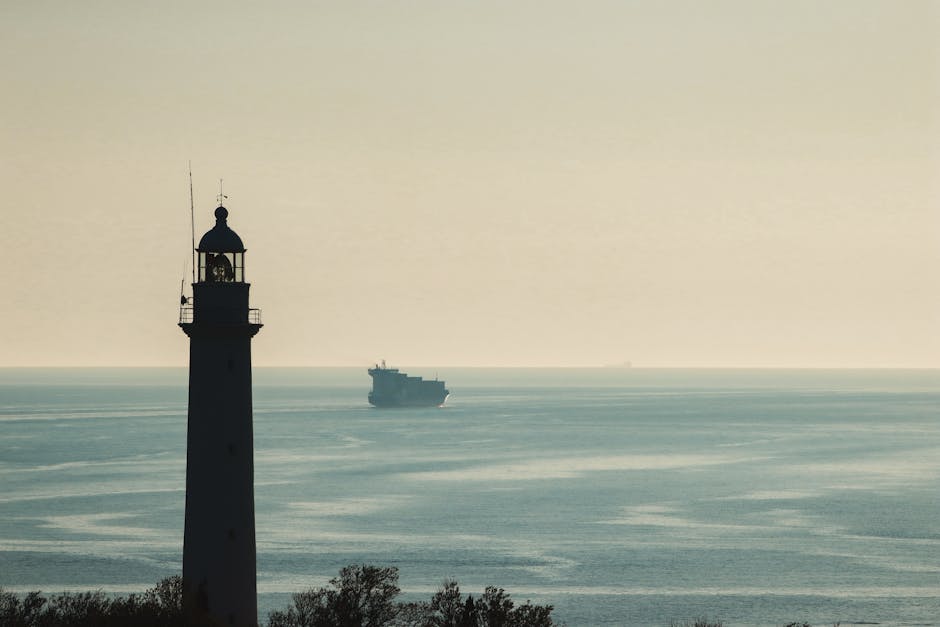
- US President Donald Trump accuses Iran of failing to manage the Strait of Hormuz as agreed, highlighting ongoing tensions between the two nations.
- The Strait of Hormuz is crucial for global oil trade, with about 20% of the world’s oil supply passing through it daily.
- Tensions in the region are increasing with Israel and Lebanon preparing to commence peace talks, but Iran’s actions remain a concern.
- Trump’s comments come amid strategic importance of the strait, which Iran controls, raising questions about regional stability.
- There’s a risk of disruption in oil and gas supply if the strait is not managed effectively, potentially impacting global markets.
In a stark warning to Iran, US President Donald Trump has accused the country of failing to uphold its commitments in managing the Strait of Hormuz, a critical waterway for global oil trade. The president’s comments, made during a press briefing at the White House, come as tensions in the region continue to simmer, with Israel and Lebanon preparing to commence peace talks. Trump stated, “Iran is not doing the job that we agreed upon. They are doing a very poor job with the Strait of Hormuz, and this is not the agreement we have.” The statement underscores the ongoing friction between the two nations and highlights the strategic importance of the strait, which sees about 20% of the world’s oil supply pass through it daily.
The Significance of the Strait of Hormuz

The Strait of Hormuz, located between the Persian Gulf and the Gulf of Oman, is one of the most important maritime chokepoints in the world. It is a narrow passage, only 21 miles wide at its narrowest point, through which a significant portion of global oil and liquefied natural gas (LNG) flows. The strait’s strategic importance cannot be overstated, as any disruption in its operations can have severe economic and geopolitical consequences. Iran’s control over the strait has long been a source of concern for the international community, particularly the United States, which has accused Iran of using the strait as a leverage point in its regional disputes.
Trump’s Accusations and Regional Context

President Trump’s recent criticism of Iran’s management of the Strait of Hormuz is part of a broader pattern of increasing tensions between the two countries. The US has been imposing economic sanctions on Iran since 2018, following the US withdrawal from the 2015 Iran nuclear deal. These sanctions have severely impacted Iran’s economy, leading to a series of retaliatory actions, including the seizure of foreign oil tankers and threats to close the strait. Trump’s statement that Iran is “doing a very poor job” with the strait is a direct challenge to Iran’s claims of maintaining security and order in the region, and it comes as Israel and Lebanon are set to begin peace talks, potentially reshaping the Middle East’s political landscape.
Analysis: The Impact of Iran’s Actions
Iran’s actions in the Strait of Hormuz have significant implications for global energy markets and regional stability. The country’s alleged non-compliance with international agreements and its aggressive behavior in the strait can lead to increased insurance premiums for ships passing through, higher oil prices, and a potential military response from the US and its allies. Experts argue that the US is leveraging its influence to pressure Iran into better behavior, while Iran sees the strait as a key bargaining chip in its negotiations with the international community. The data shows that any closure or disruption of the strait can cause a sharp spike in oil prices, affecting economies worldwide. This dynamic is further complicated by the ongoing peace talks between Israel and Lebanon, which could shift the balance of power in the region and add another layer of complexity to the US-Iran relationship.
Implications for Regional and Global Actors
The implications of Trump’s warning extend beyond just Iran and the United States. Other regional actors, including Saudi Arabia, the United Arab Emirates, and Qatar, all of which rely heavily on the strait for their oil exports, are closely monitoring the situation. Globally, major oil-importing nations such as China, India, and Japan are also on high alert, as any disruption in the strait could have a direct impact on their economic stability. The international community, particularly the European Union, is urging both sides to de-escalate tensions and return to diplomatic channels to resolve the issue. The peace talks between Israel and Lebanon add another layer of complexity, as a successful outcome could alter the regional dynamics and potentially reduce Iran’s influence in the area.
Expert Perspectives
Dr. Trita Parsi, an expert on Middle Eastern affairs, argues that the US is using the Strait of Hormuz as a pressure point to force Iran back to the negotiating table. “The US has a history of using economic and military leverage to achieve its goals in the region,” he says. On the other hand, Dr. Nader Uskowi, a senior fellow at the Middle East Institute, warns that Iran’s actions in the strait are a sign of its desperation and that a military confrontation could have catastrophic consequences for all parties involved.
As the situation in the Strait of Hormuz remains tense, the international community will be watching closely for any signs of de-escalation. The upcoming peace talks between Israel and Lebanon could provide a glimmer of hope for a more stable Middle East, but the question remains: will Iran and the US find a diplomatic solution to their ongoing disputes, or will the region slide further into conflict?