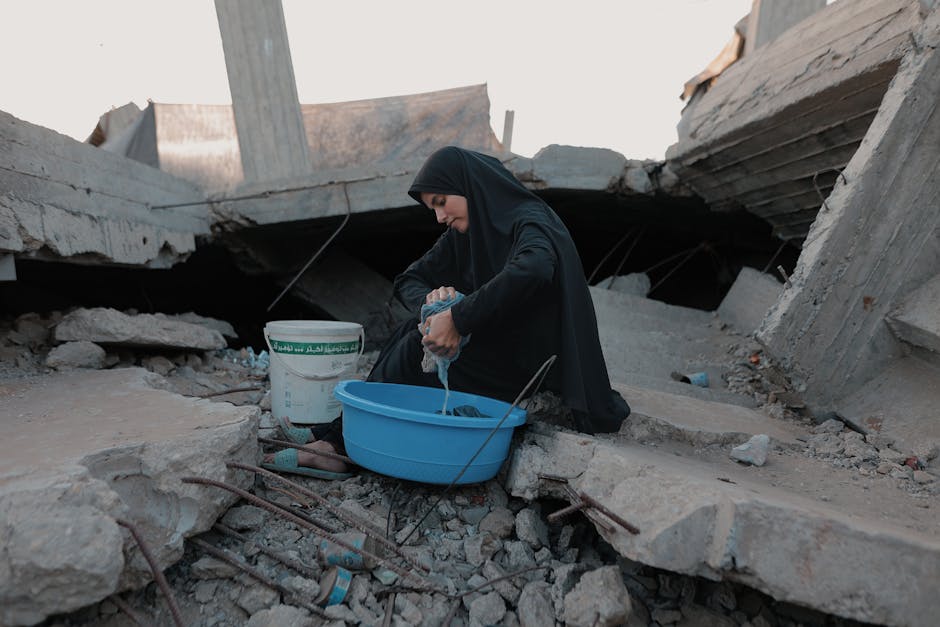
- Settler violence has surged in the West Bank, resulting in the displacement of dozens of Palestinian families and destruction of their homes.
- The Israeli government has faced criticism for failing to take decisive action to stop the violence, with accusations of complicity surfacing.
- The settler violence is part of a long and complex history of conflict between Israeli settlers and Palestinian communities in the West Bank.
- The Israeli government’s support for settler expansion on occupied territory has contributed to the escalation of tensions between settlers and Palestinians.
- International leaders and human rights groups have condemned the settler violence as a blatant attempt to erase Palestinian communities.
As the Jewish community around the world celebrates Passover, a holiday commemorating the Israelites’ liberation from slavery, Israeli settlers in the West Bank have turned the occasion into a celebration of their own, one that has been marred by allegations of ethnic cleansing. In recent weeks, settler violence has surged, resulting in the displacement of dozens of Palestinian families and the destruction of their homes. The situation has sparked widespread condemnation from human rights groups and international leaders, who have denounced the settlers’ actions as a blatant attempt to erase Palestinian communities. The Israeli government has thus far failed to take decisive action to stop the violence, prompting accusations of complicity.
The Historical Context of Settler Violence

The current wave of settler violence is not an isolated incident, but rather the latest chapter in a long and complex history of conflict between Israeli settlers and Palestinian communities in the West Bank. The area has been under Israeli occupation since 1967, and over the years, settlers have established numerous communities, often on land that was previously owned by Palestinians. The Israeli government has consistently supported the expansion of these settlements, despite international law prohibiting the construction of civilian communities on occupied territory. As a result, tensions between settlers and Palestinians have simmered, occasionally boiling over into violence. The Passover celebrations have provided a catalyst for the latest outbreak, with settlers using the occasion to assert their claims to the land and intimidate their Palestinian neighbors.
Key Details of the Recent Violence

According to reports from human rights groups and Palestinian officials, the recent wave of settler violence has resulted in the displacement of at least 50 Palestinian families, with many more facing the threat of eviction. The violence has been characterized by attacks on Palestinian homes, businesses, and agricultural land, as well as the destruction of infrastructure, such as roads and water pipes. Settlers have also been accused of using live ammunition against Palestinian civilians, resulting in injuries and, in some cases, fatalities. The Israeli military has been criticized for its response to the violence, with many alleging that soldiers have stood by and allowed settlers to attack Palestinians, or have even participated in the violence themselves. The lack of accountability has emboldened the settlers, who have continued to carry out attacks with impunity.
Analysis of the Conflict
The ongoing conflict between Israeli settlers and Palestinian communities in the West Bank is a complex and multifaceted issue, driven by a combination of historical, cultural, and economic factors. At its core, the conflict is a struggle for control of the land and the resources it contains. Israeli settlers, who are predominantly Jewish, believe that they have a biblical right to the territory, which they claim is part of the historic Land of Israel. Palestinians, on the other hand, argue that they have lived on the land for generations and have a legitimate right to self-determination. The conflict has been exacerbated by the construction of Israeli settlements, which has led to the displacement of Palestinian communities and the fragmentation of their land. The situation has also been influenced by external factors, such as the role of international donors and the policies of the Israeli government, which have contributed to the perpetuation of the conflict.
Implications of the Conflict
The ongoing conflict between Israeli settlers and Palestinian communities has significant implications for the entire region. The displacement of Palestinian families and the destruction of their homes have resulted in a humanitarian crisis, with many left without access to basic necessities, such as food, water, and shelter. The conflict has also had a profound impact on the social and economic fabric of Palestinian society, with many communities facing poverty, unemployment, and a lack of opportunities. Furthermore, the conflict has contributed to a broader sense of instability in the region, with the potential to spark further violence and unrest. The international community has a critical role to play in resolving the conflict, through the provision of humanitarian aid, the promotion of dialogue and negotiation, and the application of pressure on the Israeli government to respect the rights of Palestinian civilians.
Expert Perspectives
Experts and analysts have offered differing perspectives on the conflict, with some arguing that the Israeli government bears primary responsibility for the violence, while others claim that the settlers are acting independently. According to Dr. Sara Roy, a senior research scholar at Harvard University, “the Israeli government’s support for the settlements and its failure to hold settlers accountable for their actions have created a culture of impunity, which has emboldened the settlers to carry out attacks on Palestinian civilians.” In contrast, Dr. David Makovsky, a fellow at the Washington Institute for Near East Policy, argues that “the settlers are not acting on behalf of the Israeli government, but rather are driven by their own ideological and theological beliefs, which prioritize the establishment of a Jewish state in the West Bank.”
Looking to the future, it is clear that the conflict between Israeli settlers and Palestinian communities will continue to be a major challenge for the international community. As the situation on the ground continues to deteriorate, there is an urgent need for a negotiated solution, one that addresses the underlying issues driving the conflict and provides a framework for a just and lasting peace. The question remains, however, whether the parties involved are willing to engage in meaningful dialogue and make the necessary compromises to achieve a peaceful resolution. As the international community watches with bated breath, it is clear that the coming months and years will be critical in determining the future of the region and the prospects for a lasting peace.