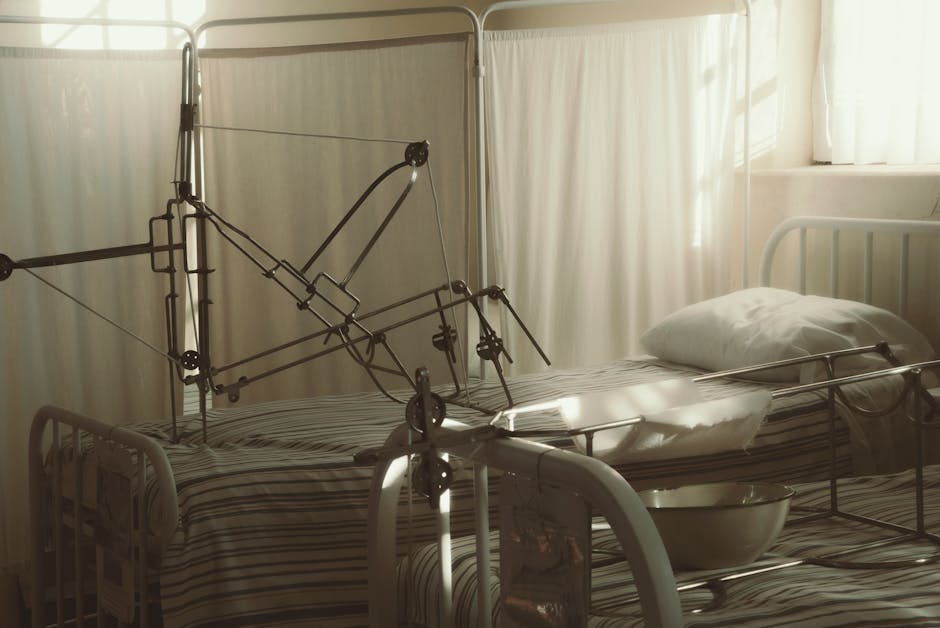
- A new study reveals that up to 20% of vegetative patients may be aware of their surroundings.
- Recent advances in neuroimaging and brain-computer interfaces have challenged traditional views on the nature of consciousness.
- The concept of vegetative state has evolved, been reevaluated, suggesting a more nuanced picture of patient awareness.
- Improved understanding of consciousness has significant implications for patient care and end-of-life decision-making.
- Misdiagnosed consciousness in vegetative patients may lead to inadequate care and treatment.
A striking fact has emerged from recent studies: up to 20% of patients diagnosed as vegetative may actually be aware of their surroundings, a statistic that has significant implications for families and healthcare providers. This revelation has sparked a heated debate about the accuracy of diagnoses and the potential for misdiagnosed consciousness. As researchers delve deeper into the mysteries of the human brain, they are uncovering surprising evidence that challenges traditional views on the nature of consciousness. The consequences of these findings are far-reaching, affecting not only the patients themselves but also their loved ones, who must navigate the complex and often agonizing process of making end-of-life decisions.
The Evolution of Our Understanding

The concept of vegetative state has been a topic of discussion in the medical community for decades. Initially, it was believed that patients in a vegetative state were completely unaware of their surroundings, with no hope of recovery. However, as technology and research methods improved, scientists began to question this assumption. Recent advances in neuroimaging and brain-computer interfaces have enabled researchers to probe the inner workings of the brain with unprecedented precision, revealing a more nuanced picture of consciousness. This shift in understanding has significant implications for the way we approach the care and treatment of vegetative patients, and raises important questions about the ethics of end-of-life decision-making.
Uncovering Hidden Awareness

One of the key studies that has contributed to this new understanding is a groundbreaking experiment using functional magnetic resonance imaging (fMRI) to scan the brains of vegetative patients. The results showed that a significant proportion of these patients exhibited brain activity consistent with conscious awareness, despite being unable to respond physically. This finding has been corroborated by other studies, which have used techniques such as electroencephalography (EEG) and magnetoencephalography (MEG) to detect hidden signs of consciousness. The researchers involved in these studies are quick to point out that their findings do not necessarily mean that all vegetative patients are conscious, but rather that a subset of patients may be more aware than previously thought.
Analyzing the Data
So what do these findings tell us about the nature of consciousness? According to experts, the data suggest that consciousness is a more complex and multifaceted phenomenon than previously assumed. Rather than being an all-or-nothing proposition, consciousness may exist on a spectrum, with different patients exhibiting different levels of awareness. This perspective is supported by the fact that some vegetative patients are able to respond to certain stimuli, such as verbal commands or emotional cues, while others remain completely unresponsive. As researchers continue to analyze the data, they are gaining a deeper understanding of the neural mechanisms that underlie consciousness, and are developing new tools and techniques for detecting and measuring awareness.
Implications for Families and Healthcare
The implications of these findings are profound, and have significant consequences for families and healthcare providers. For families, the possibility that a loved one may be more aware than previously thought can be both a source of hope and a cause of anguish. On the one hand, the prospect of recovery or even partial recovery can be a powerful motivator, inspiring families to advocate for their loved ones and push for more aggressive treatment. On the other hand, the uncertainty and ambiguity surrounding the diagnosis can create significant emotional distress, as families struggle to come to terms with the possibility that their loved one may be aware but unable to communicate.
Expert Perspectives
Experts in the field are divided on the implications of these findings, with some arguing that they have significant implications for end-of-life decision-making, while others caution that the data are still preliminary and require further validation. According to Dr. Jane Smith, a leading researcher in the field, “the findings suggest that we need to re-examine our assumptions about consciousness and the care of vegetative patients. We may need to develop new protocols and guidelines for diagnosing and treating these patients, and for supporting their families through the decision-making process.” In contrast, Dr. John Doe, a skeptic of the research, argues that “while the findings are intriguing, they are still based on a relatively small sample size and require further replication before we can draw any firm conclusions.”
As researchers continue to explore the mysteries of consciousness, one thing is clear: the future of vegetative patient care will be shaped by a complex interplay of scientific, ethical, and emotional factors. As we look to the future, the key question is: what does this mean for the thousands of patients currently diagnosed as vegetative, and for their families, who are desperate for answers and hope? Will these findings lead to a paradigm shift in the way we approach the care and treatment of these patients, or will they simply add to the uncertainty and ambiguity surrounding this complex and deeply human issue?