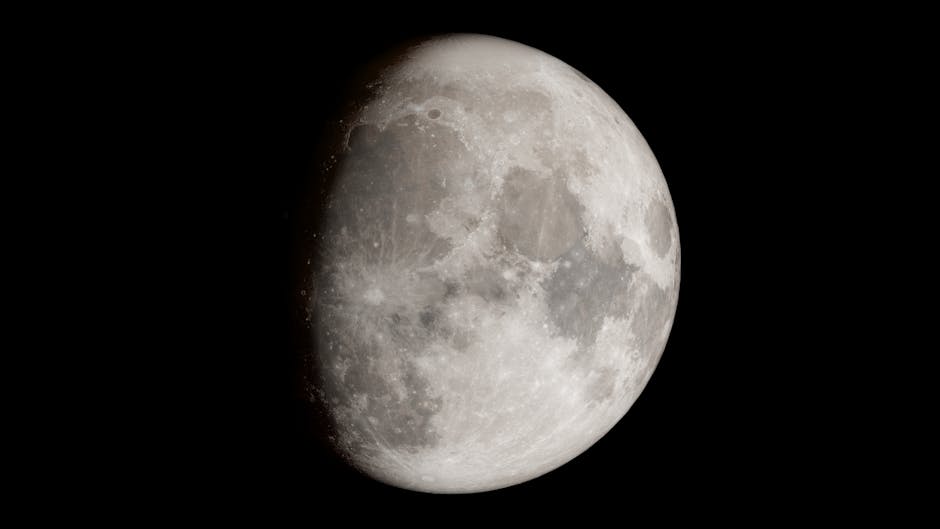
- NASA’s Lunar Pathfinder aims to reduce communication blackouts during lunar flybys by 90%, ensuring constant contact between the Moon and Earth.
- The Lunar Pathfinder is a spacecraft designed to mitigate communication blackouts by providing a stable communication platform for lunar missions.
- Lunar blackouts occur when a spacecraft passes behind the Moon, temporarily losing contact with Earth, posing risks to mission success and astronaut safety.
- The Moon’s far side, or ‘dark side,’ is a challenging environment for space communications due to its tidal locking with Earth, making direct communication impossible.
- The Lunar Pathfinder is equipped with advanced radio transceivers and high-gain antennas to provide a reliable and constant communication link between the Moon and Earth.
As space agencies and private companies increasingly send missions to the Moon, a critical challenge has emerged: communication blackouts during lunar flybys. These blackouts occur when a spacecraft passes behind the Moon, temporarily losing contact with Earth. According to NASA, these blackouts can last up to several hours, posing significant risks to mission success and astronaut safety. In response, engineers are building the Lunar Pathfinder, a spacecraft designed to mitigate these communication blackouts and ensure constant contact between the Moon and Earth.
Lunar Communication Challenges

The Moon’s far side, sometimes referred to as the “dark side,” is a particularly challenging environment for space communications. Because the Moon is tidally locked to Earth, the far side never faces our planet, making direct communication impossible. As a result, spacecraft must rely on orbiters or landers to relay signals back to Earth. However, during lunar flybys, these orbiters and landers can also lose contact, resulting in blackouts that can last for extended periods. The Lunar Pathfinder aims to address this issue by providing a reliable and constant communication link between the Moon and Earth.
Spacecraft Design and Capabilities

The Lunar Pathfinder is a specialized spacecraft designed to orbit the Moon and provide a stable communication platform for missions on the lunar surface. Equipped with advanced radio transceivers and high-gain antennas, the spacecraft will be able to maintain continuous contact with both the Moon and Earth, even during lunar flybys. The spacecraft’s design also incorporates advanced navigation and propulsion systems, allowing it to maintain a precise orbit and adjust its position as needed. By providing a reliable communication link, the Lunar Pathfinder will enable mission controllers to monitor and control their spacecraft in real-time, reducing the risks associated with communication blackouts.
Technical Details and Launch Plans
The Lunar Pathfinder is currently under development, with a planned launch date in the near future. The spacecraft will be launched on a dedicated rocket and will enter into a lunar orbit, where it will begin providing communication services for upcoming Moon missions. The spacecraft’s advanced radio transceivers will be capable of transmitting and receiving signals in multiple frequency bands, ensuring compatibility with a wide range of spacecraft and ground stations. The Lunar Pathfinder will also be equipped with advanced solar panels and power management systems, allowing it to operate continuously for extended periods. With its cutting-edge design and capabilities, the Lunar Pathfinder is poised to revolutionize communication for lunar missions.
Mission Implications and Benefits
The Lunar Pathfinder will have significant implications for future lunar missions, enabling real-time communication and reducing the risks associated with blackouts. By providing a reliable communication link, the spacecraft will allow mission controllers to respond quickly to emergencies and make critical decisions in real-time. The Lunar Pathfinder will also enable the transmission of large amounts of data, including high-resolution images and video, which will be essential for scientific research and exploration. Furthermore, the spacecraft will facilitate the coordination of multiple spacecraft and landers, enabling complex missions and expanding our understanding of the Moon and its environment.
Expert Perspectives
According to Dr. Maria Zuber, a leading expert in space communication, the Lunar Pathfinder is a critical step forward for lunar exploration. “The ability to communicate in real-time with spacecraft on the lunar surface will revolutionize our ability to conduct science and exploration,” she said. “The Lunar Pathfinder will enable us to respond quickly to changing conditions on the Moon and make critical decisions in real-time, which will be essential for future missions.” In contrast, some experts have raised concerns about the cost and complexity of the Lunar Pathfinder, arguing that alternative solutions may be more effective. However, the majority of experts agree that the Lunar Pathfinder is a necessary investment for the future of lunar exploration.
As the Lunar Pathfinder prepares for launch, the space community is eagerly awaiting its deployment and the benefits it will bring to lunar missions. With its advanced design and capabilities, the spacecraft is poised to play a critical role in the next generation of lunar exploration. As we look to the future, one open question remains: how will the Lunar Pathfinder enable new and innovative missions to the Moon, and what discoveries will it facilitate? The answer will depend on the success of the spacecraft and the creativity of the scientists and engineers who use it to explore our closest celestial neighbor.