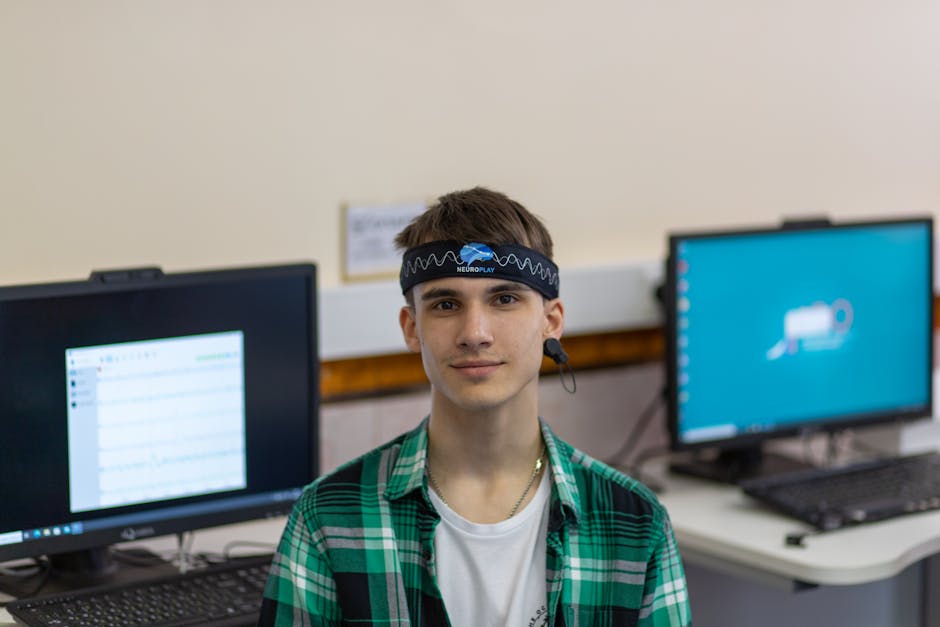
- Digital avatars can revolutionize dance by allowing individuals with disabilities to express themselves in new and innovative ways.
- Brainwave technology can read and interpret brain signals, enabling users to control digital entities with their thoughts.
- This technology bridges the gap between physical and digital worlds, providing opportunities for artistic expression and connection with audiences.
- Digital avatars can restore a sense of autonomy and provide a platform for individuals to engage in activities they thought were lost to their conditions.
- Olson’s performance showcases the rapid advancements in digital technology and the resilience of individuals who refuse to let their conditions define them.
In a groundbreaking performance, Breanna Olson, a talented dancer diagnosed with motor neuron disease (MND), took to the stage once more, defying the physical limitations imposed by her condition. Through the innovative use of brainwave technology, Olson was able to control a digital avatar, re-establishing the expression and connection she thought had been lost to her disease. This remarkable achievement not only highlights the rapid advancements in digital technology but also underscores the resilience and determination of individuals like Olson, who refuse to let their conditions define them.
The Power of Brainwave Technology

The integration of brainwave technology into performance art is a relatively new and burgeoning field, offering unprecedented opportunities for individuals with disabilities to express themselves in ways previously unimaginable. This technology, which reads and interprets brain signals, allows users to control digital entities with their thoughts, effectively bridging the gap between the physical and digital worlds. For Olson, this meant being able to dance again, an activity that had been an integral part of her life before MND. The emotional and psychological impact of such technology cannot be overstated, as it not only restores a sense of autonomy but also provides a platform for artistic expression and connection with audiences.
A New Era in Digital Performance

Olson’s performance marks a significant milestone in the fusion of technology and art, demonstrating the vast potential of digital avatars in redefining the boundaries of stage performance. The event was made possible through a collaborative effort between technologists, artists, and medical professionals, who worked tirelessly to develop and refine the brainwave technology. This collaboration is a testament to the innovative spirit of interdisciplinary work, where experts from diverse fields come together to achieve the impossible. As technology continues to evolve, we can expect to see more such performances, challenging our perceptions of ability, disability, and the very essence of artistic expression.
Behind the Scenes: The Technology and the Team
The success of Olson’s digital performance is attributed to the sophisticated brain-computer interface (BCI) technology that translates her brain signals into commands for the digital avatar. This complex process involves the use of electroencephalography (EEG) to record brain activity, which is then analyzed and interpreted by sophisticated algorithms. The team behind this technology includes neuroscientists, software engineers, and performance artists, all of whom played a crucial role in ensuring that the digital avatar accurately reflected Olson’s intentions and emotions. The precision and nuance achieved in this performance are a result of meticulous planning, extensive rehearsals, and a deep understanding of both the technological and artistic aspects of the project.
Implications and Future Directions
The implications of this technology extend far beyond the realm of performance art, holding promise for individuals with a wide range of disabilities. It suggests a future where technology can not only assist but empower, providing new avenues for self-expression, communication, and connection. For Olson and others like her, this means a renewed sense of purpose and fulfillment, as they are once again able to engage in activities they love. As this technology continues to advance, we can anticipate seeing its application in various sectors, from healthcare and education to entertainment and beyond, revolutionizing the way we interact with the digital world.
Expert Perspectives
Experts in the field of neurotechnology and performance art hail Olson’s performance as a breakthrough, highlighting the emotional depth and authenticity it brought to the digital stage. They note that such innovations are not merely about technological advancement but about enhancing human experience and challenging societal norms around disability and inclusion. According to Dr. Maria Rodriguez, a leading neuroscientist involved in the project, “The true power of this technology lies in its ability to transcend physical limitations, allowing individuals to express themselves in ways that were previously thought impossible.” This perspective is echoed by performance artist Michael Davis, who believes that “digital avatars are not just tools but extensions of ourselves, enabling new forms of storytelling and connection with audiences.”
As we look to the future, the question remains: what other boundaries can be pushed with the integration of brainwave technology and performance art? Will we see a rise in digital performances that not only entertain but also educate and inspire, challenging our perceptions of disability and capability? Only time will tell, but one thing is certain – the stage is set for a revolution in digital performance, one that promises to be more inclusive, more expressive, and more extraordinary than ever before.