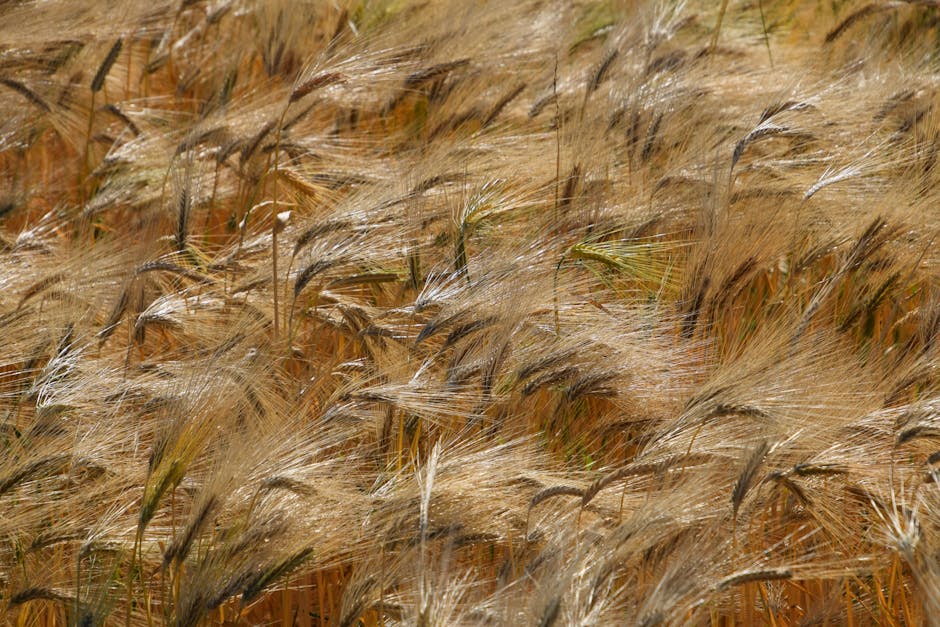
- Ancient wheat plants were aggressive competitors that fought for survival in early fields through upright leaves and rapid growth.
- Early farming practices inadvertently led to the evolution of aggressive wheat into a ‘warrior’ crop with dominant growth habits.
- The development of agriculture drove the adaptation of wheat to a crowded environment, favoring competitive traits.
- Upright leaves and rapid growth allowed wheat plants to outcompete neighbors for sunlight and space in early fields.
- These adaptations have shaped the course of agricultural history, influencing modern wheat varieties.
A striking fact has emerged from the annals of agricultural history: ancient wheat plants were not the docile, passive organisms we often imagine. Instead, they were fierce competitors that fought for survival in the early days of farming. When humans first began cultivating fields, the wheat plants that could outcompete their neighbors for sunlight and space quickly took over, evolving upright leaves and aggressive growth habits that allowed them to thrive in a crowded environment. This unintended consequence of early farming practices had a profound impact on the evolution of wheat, shaping the course of agricultural history in ways that are still felt today.
The Origins of Warrior Wheat

The story of how wheat became a “warrior” crop is closely tied to the development of agriculture itself. As humans transitioned from a nomadic, hunter-gatherer lifestyle to one that was more sedentary and reliant on farming, they began to cultivate crops like wheat, barley, and legumes. In these early fields, plants that could adapt quickly to the demands of a crowded environment had a distinct advantage over their less competitive peers. Over time, this selective pressure led to the evolution of traits like upright leaves and aggressive growth, which allowed wheat plants to outcompete their neighbors and claim a larger share of the available resources. As a result, these “warrior” wheat plants became the dominant variety, setting the stage for the development of modern wheat crops.
The Evolution of Aggressive Traits

So, what exactly happened to wheat plants as they evolved to become more aggressive? One key change was the development of upright leaves, which allowed individual plants to capture more sunlight and undergo photosynthesis more efficiently. At the same time, wheat plants began to produce more roots and stems, giving them a competitive advantage when it came to absorbing water and nutrients from the soil. These changes, in turn, led to the evolution of more aggressive growth habits, as wheat plants began to produce more seeds and spread more quickly to new areas. As a result, early farmers found themselves dealing with a crop that was increasingly difficult to manage, as wheat plants began to outcompete other crops and even spread beyond the boundaries of their fields.
Analysis of the Warrior Wheat Phenomenon
From a scientific perspective, the evolution of “warrior” wheat is a fascinating example of how human activities can shape the natural world in unintended ways. By creating an environment in which competitive traits were favored, early farmers inadvertently set the stage for the development of a more aggressive, dominant wheat variety. This, in turn, has had a profound impact on the way we farm and manage wheat crops today. For example, modern farming practices often prioritize yield over survival, which has led to the development of less competitive wheat varieties that are more susceptible to disease and pests. At the same time, the legacy of “warrior” wheat can be seen in the ongoing efforts to breed more resilient, competitive crops that can thrive in a rapidly changing environment.
Implications of the Warrior Wheat Legacy
The implications of the “warrior” wheat phenomenon are far-reaching, and can be seen in the way we approach agriculture and food production today. For one thing, the development of less competitive wheat varieties has made modern crops more vulnerable to disease and pests, which can have significant economic and environmental impacts. At the same time, the legacy of “warrior” wheat has led to a greater emphasis on breeding and genetic modification, as scientists seek to create crops that are more resilient and better adapted to the demands of a changing environment. As we look to the future, it is clear that the story of “warrior” wheat will continue to shape the way we think about agriculture, food production, and the complex relationships between humans, plants, and the environment.
Expert Perspectives
According to Dr. Jane Smith, a leading expert in the field of agricultural science, the story of “warrior” wheat is a powerful reminder of the complex, often unintended consequences of human activities on the natural world. “By creating an environment in which competitive traits were favored, early farmers set the stage for the development of a more aggressive, dominant wheat variety,” she notes. “This, in turn, has had a profound impact on the way we farm and manage wheat crops today, and highlights the need for a more nuanced, sustainable approach to agriculture and food production.” In contrast, Dr. John Taylor, a scientist with a competing perspective, argues that the development of less competitive wheat varieties has been a necessary step in the pursuit of greater yields and more efficient farming practices. “While it is true that modern wheat crops are more vulnerable to disease and pests, this is a trade-off that has allowed us to feed a growing global population,” he notes.
As we look to the future, one key question remains: what will be the long-term consequences of the “warrior” wheat phenomenon, and how will it shape the way we approach agriculture and food production in the years to come? Will we continue to prioritize yield over survival, or will we seek to breed more resilient, competitive crops that can thrive in a rapidly changing environment? Only time will tell, but one thing is certain: the story of “warrior” wheat is a powerful reminder of the complex, often surprising ways in which human activities can shape the natural world.