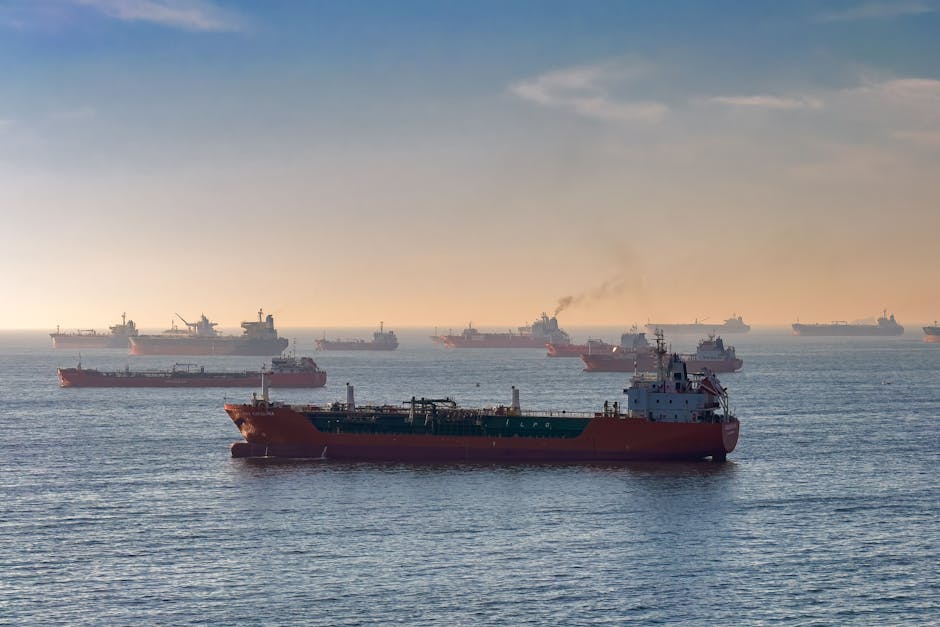
- The Strait of Hormuz remains under Iran’s control despite a recent ceasefire, impacting 20% of global oil supply
- The Strait’s closure poses significant economic risks, including increased oil prices and instability
- The waterway’s strategic importance cannot be overstated, as it’s the primary route for oil exports from key Middle Eastern countries
- Iran’s control of the Strait raises concerns about potential future disruptions to the global oil supply
- A full reopening of the Strait is urgent to prevent further economic instability
The Strait of Hormuz, a critical waterway for global oil trade, remains under Iran’s control despite a recent ceasefire, according to Sultan Ahmed Al Jaber, the CEO of Abu Dhabi National Oil Company. This development has significant implications for the global economy, as the Strait of Hormuz is responsible for approximately 20% of the world’s oil supply. Al Jaber’s warning highlights the urgent need for a full reopening of the Strait to prevent further disruptions to the global oil market, which could lead to increased prices and economic instability.
The Strait of Hormuz: A Critical Waterway

The Strait of Hormuz is a vital shipping lane that connects the Persian Gulf to the Arabian Sea, allowing oil tankers to transport crude oil from the Middle East to global markets. The waterway’s strategic importance cannot be overstated, as it is the primary route for oil exports from countries such as Saudi Arabia, Iraq, and the United Arab Emirates. The recent ceasefire has not alleviated concerns about the security of the Strait, and Iran’s continued control of the passage has raised fears about the potential for future disruptions to the global oil supply. As the global economy continues to recover from the COVID-19 pandemic, the stability of the oil market is crucial for maintaining economic growth and preventing inflation.
Key Players and Interests

The dispute over the Strait of Hormuz involves several key players, including Iran, the United Arab Emirates, and the United States. Iran’s control of the Strait is seen as a strategic move to exert influence over the global oil market and to counter the effects of economic sanctions imposed by the United States. The UAE, on the other hand, is keen to ensure the free flow of oil through the Strait to maintain its own economic interests and to prevent a surge in global oil prices. The United States, as a major consumer of oil, is also closely monitoring the situation and has expressed concerns about the potential impact of the dispute on the global economy. As tensions between these nations continue to escalate, the situation remains volatile, and the potential for further conflict cannot be ruled out.
Analysis and Implications
The ongoing dispute over the Strait of Hormuz has significant implications for the global oil market and the broader economy. If Iran maintains control of the Strait, it could lead to a reduction in oil supplies, resulting in higher prices and economic instability. The situation is further complicated by the fact that the global oil market is already facing challenges due to the COVID-19 pandemic, which has led to reduced demand and increased volatility. According to experts, a prolonged closure of the Strait of Hormuz could lead to a surge in oil prices, potentially exceeding $100 per barrel, which would have far-reaching consequences for the global economy. As such, it is essential for the international community to work towards a resolution to the dispute and to ensure the free flow of oil through the Strait.
Economic Consequences
The economic consequences of the dispute over the Strait of Hormuz are far-reaching and could have a significant impact on the global economy. A reduction in oil supplies could lead to higher prices, which would increase the cost of production and transportation, ultimately affecting consumers and businesses worldwide. The situation is particularly concerning for countries that rely heavily on oil imports, such as China, India, and Japan, which could face significant economic challenges if the dispute is not resolved. Furthermore, the uncertainty surrounding the situation could lead to increased volatility in financial markets, potentially triggering a broader economic downturn. As such, it is essential for policymakers and industry leaders to work together to find a solution to the dispute and to mitigate its economic consequences.
Expert Perspectives
Experts are divided on the potential outcome of the dispute over the Strait of Hormuz, with some predicting a resolution through diplomatic efforts and others warning of a potential escalation of tensions. According to Dr. Ellen Wald, a leading expert on the global oil market, “the situation is highly volatile, and the potential for further conflict cannot be ruled out.” On the other hand, Dr. Robert Johnston, a senior fellow at the Council on Foreign Relations, believes that “diplomatic efforts can still resolve the dispute, but it will require a concerted effort from all parties involved.” As the situation continues to unfold, it is essential to consider the perspectives of experts and to work towards a resolution that ensures the stability of the global oil market.
As the global community watches the situation unfold, one question remains: what will happen next? Will diplomatic efforts succeed in resolving the dispute, or will tensions escalate, leading to further conflict? The answer to this question will have significant implications for the global economy and the stability of the oil market. As such, it is essential to continue monitoring the situation closely and to work towards a resolution that ensures the free flow of oil through the Strait of Hormuz, ultimately maintaining the stability of the global economy.