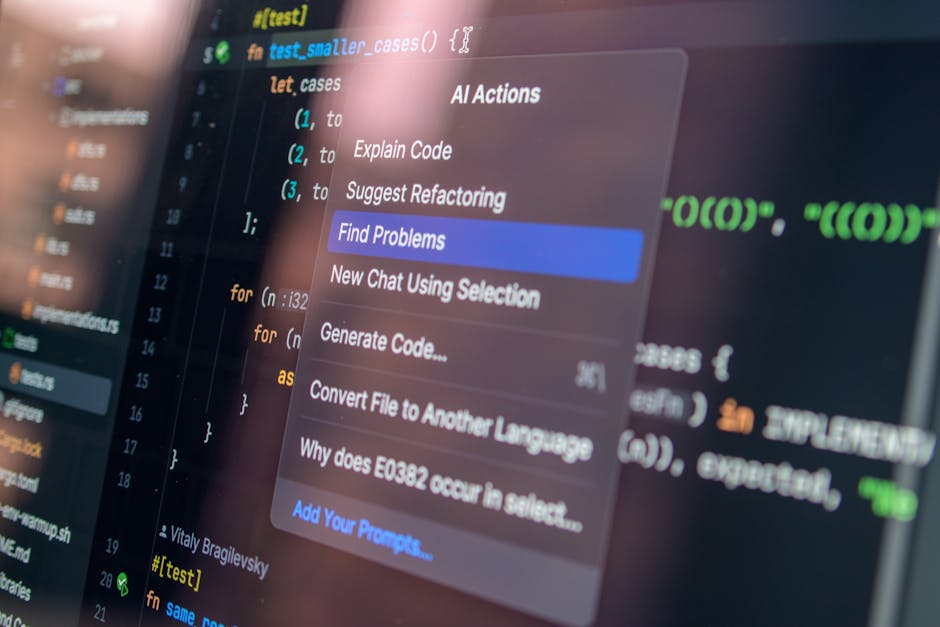
- AI developers are shifting their code spend towards more efficient and cost-effective solutions to drive progress in the field.
- The reallocation of $100/month Claude code spend to alternatives like Zed and OpenRouter underscores a broader trend in AI development.
- Developers are seeking solutions that offer greater flexibility, better support for cutting-edge AI models, and more favorable cost structures.
- The shift in code spend is not just about cost savings, but also about future-proofing AI development to meet complex challenges.
- AI technologies are becoming increasingly integral to various aspects of modern life, influencing how developers choose to invest their resources.
The world of artificial intelligence (AI) is witnessing a profound shift in how resources are allocated, with a notable example being the reallocation of $100/month Claude code spend to alternatives such as Zed and OpenRouter. This move underscores a broader trend within the AI development community, where practitioners are continually seeking more efficient, cost-effective, and innovative solutions to drive progress in the field. As AI technologies become increasingly integral to various aspects of modern life, from healthcare and finance to education and transportation, the way developers choose to invest their resources can have far-reaching consequences.
The Evolving Landscape of AI Development

The decision to reallocate code spend reflects the dynamic nature of AI development, where advancements are rapid and the ecosystem is highly competitive. Developers and researchers are constantly on the lookout for tools, platforms, and methodologies that can enhance the performance, scalability, and ethical integrity of AI systems. The migration towards Zed and OpenRouter, among other platforms, indicates a preference for solutions that offer greater flexibility, better support for cutting-edge AI models, and more favorable cost structures. This shift is not merely about cost savings; it’s about future-proofing AI development to meet the complex challenges of tomorrow.
Key Players and Technologies

At the heart of this reallocation are key players and technologies that are redefining the AI landscape. Zed and OpenRouter, for instance, represent a new wave of platforms designed to democratize access to AI capabilities, making it easier for a broader range of developers to build, deploy, and manage AI models. These platforms are not only attractive due to their economic benefits but also because they often come with robust community support, extensive documentation, and a commitment to open standards. The involvement of such platforms in the AI ecosystem signals a move towards greater openness, collaboration, and innovation, characteristics that are crucial for the long-term health and advancement of the field.
Analysis and Implications
Analyzing the causes and effects of this shift in code spend allocation reveals deeper trends within the AI community. The push for more efficient and accessible AI development tools is driven by the growing demand for AI solutions across industries. As AI becomes more pervasive, the need for systems that are not only powerful but also understandable, explainable, and alignable with human values becomes more pressing. The reallocation of resources to platforms like Zed and OpenRouter suggests an acknowledgement of these needs and a strategic move to address them. Furthermore, this shift could have significant effects on the AI talent landscape, with developers who are proficient in these emerging platforms likely to be in high demand.
Broader Implications and Future Directions
The implications of this trend extend beyond the immediate community of AI developers to the broader societal and economic landscapes. As AI technologies continue to evolve and permeate various aspects of life, the decisions made by developers regarding resource allocation will play a crucial role in shaping the future of AI. The move towards more open, collaborative, and cost-effective solutions could lead to a more equitable distribution of AI benefits, contributing to societal well-being and economic growth. However, it also poses challenges related to privacy, security, and the ethical use of AI, underscoring the need for vigilant oversight and responsible innovation practices.
Expert Perspectives
Experts in the field offer contrasting viewpoints on the significance of this shift. Some see it as a natural evolution of the AI development ecosystem, driven by the inherent desire for better tools and methodologies. Others caution that the rush towards new platforms might overlook the importance of foundational research and the development of AI for social good. According to Dr. Rachel Kim, a leading AI ethicist, “The reallocation of code spend to newer platforms is a double-edged sword. While it can accelerate AI advancement, it also risks diverting attention and resources away from critical areas such as AI safety and ethical AI development.”
Looking forward, the key question is what the future holds for AI development and how the current shifts in resource allocation will influence the trajectory of the field. As AI continues to advance, it is likely that we will see further realignments in how developers invest their time and money. The challenge for the community will be to balance the pursuit of innovation with the need for responsibility, ensuring that AI development serves the greater good. With the world watching and awaiting the next breakthroughs in AI, the decisions made today by developers and researchers will undoubtedly shape the course of history tomorrow.