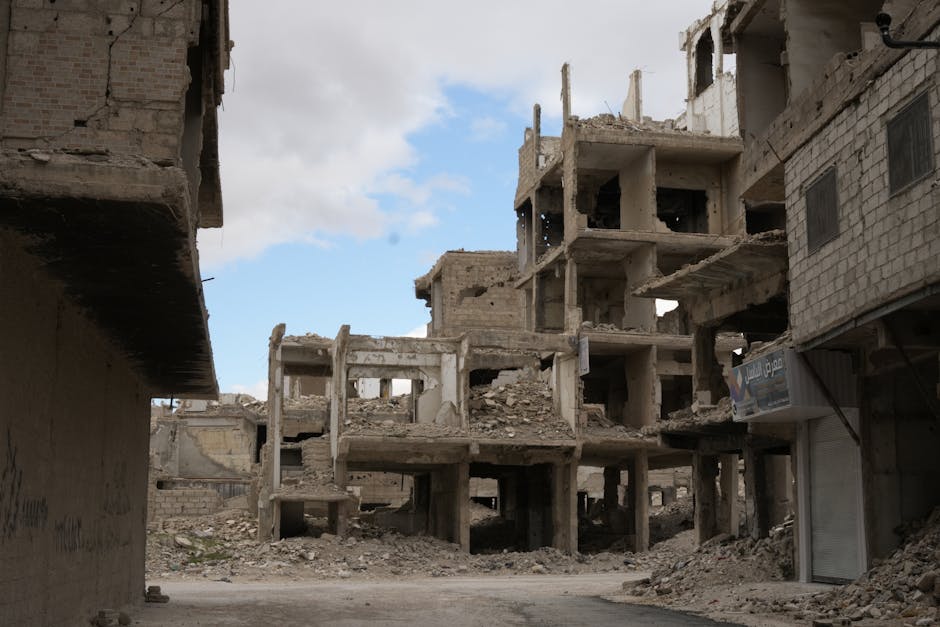
- Iran’s leaders have emerged from the recent US-Israeli onslaught with a new sense of confidence and stronger resolve.
- The country’s ability to survive the attacks and maintain control is being seen as a major victory and a testament to its strategic importance.
- The war has highlighted the complex web of alliances and rivalries in the Middle East and has raised questions about the region’s long-term stability.
- Iran’s leaders must now navigate a rapidly changing geopolitical landscape and address the deep-seated tensions and rivalries with its neighbors.
- The conflict has strengthened Iran’s sense of resistance and determination to protect its sovereignty and interests.
Iran’s theocratic rulers have emerged from the recent U.S.-Israeli onslaught with a newfound sense of confidence, buoyed by their ability to survive the attacks and maintain control over the country. The fact that they were able to withstand the military might of two of the world’s most powerful nations is being touted as a major victory, with Supreme Leader Ali Khamenei declaring that Iran’s “resistance” has been strengthened by the experience. This sense of confidence is not just a product of Iranian propaganda, but also reflects a genuine belief among the country’s leaders that they have weathered a significant storm and emerged stronger as a result.
The War’s Aftermath

The recent conflict has brought into sharp focus the complex web of alliances and rivalries that shape the Middle East, with Iran’s relationships with other countries in the region playing a crucial role in the war’s outcome. The fact that Iran was able to survive the U.S.-Israeli onslaught is a testament to the country’s strategic importance and its ability to navigate the treacherous waters of regional politics. However, the war has also highlighted the deep-seated tensions and rivalries that exist between Iran and its neighbors, and has raised questions about the long-term stability of the region. As the dust settles, it is clear that the war has created a new set of challenges and opportunities for Iran’s leaders, who must now navigate a rapidly changing geopolitical landscape.
A New Era of Confrontation

The U.S.-Israeli attacks on Iran were a watershed moment in the country’s history, marking a new era of confrontation between Iran and its enemies. The attacks were widely seen as a attempt to weaken Iran’s military capabilities and undermine its ability to project power in the region. However, they also had the effect of galvanizing support for the Iranian government, with many Iranians rallying around the flag in the face of external aggression. The fact that Iran was able to respond to the attacks with a series of missile strikes against U.S. and Israeli targets has also raised questions about the country’s military capabilities and its ability to deter future attacks. As the region enters a new era of confrontation, it is clear that Iran’s leaders will play a major role in shaping the course of events.
Causes and Consequences
The roots of the recent conflict between Iran and the U.S.-Israeli axis are complex and multifaceted, reflecting a deep-seated rivalry that stretches back decades. The fact that Iran has been able to survive the U.S.-Israeli onslaught is a testament to the country’s strategic importance and its ability to navigate the treacherous waters of regional politics. However, the war has also had significant consequences for the region, including a major escalation of tensions between Iran and its neighbors. The fact that the war has created a new set of challenges and opportunities for Iran’s leaders has also raised questions about the country’s long-term stability and its ability to navigate the rapidly changing geopolitical landscape. As the region enters a new era of confrontation, it is clear that the consequences of the war will be felt for years to come.
Regional Implications
The implications of the recent conflict between Iran and the U.S.-Israeli axis are far-reaching, with significant consequences for the region and the world. The fact that Iran has been able to survive the U.S.-Israeli onslaught has raised questions about the country’s military capabilities and its ability to deter future attacks. The war has also created a new set of challenges and opportunities for Iran’s leaders, who must now navigate a rapidly changing geopolitical landscape. As the region enters a new era of confrontation, it is clear that the implications of the war will be felt for years to come, with significant consequences for the stability and security of the region.
Expert Perspectives
Experts are divided on the implications of the recent conflict between Iran and the U.S.-Israeli axis, with some arguing that the war has strengthened Iran’s position in the region and others claiming that it has weakened the country’s ability to project power. According to Dr. Sanam Vakil, a specialist on Iranian politics at Chatham House, “the war has created a new set of challenges and opportunities for Iran’s leaders, who must now navigate a rapidly changing geopolitical landscape.” In contrast, Dr. Michael Rubin, a scholar at the American Enterprise Institute, argues that “the war has weakened Iran’s ability to project power in the region and has created new opportunities for the U.S. and its allies to challenge Iranian influence.”
As the region enters a new era of confrontation, it is clear that the implications of the war will be felt for years to come. The question on everyone’s mind is what comes next, with many wondering whether the U.S. and Israel will launch further attacks on Iran or whether the country will be able to maintain its current level of stability. According to Vakil, “the key to understanding the future of the region is to look at the complex web of alliances and rivalries that shape the Middle East, and to recognize that Iran’s relationships with other countries in the region will play a crucial role in determining the outcome of any future conflict.” As the world waits with bated breath to see what happens next, one thing is clear: the recent conflict between Iran and the U.S.-Israeli axis has marked a new era of confrontation in the region, and the implications will be felt for years to come.