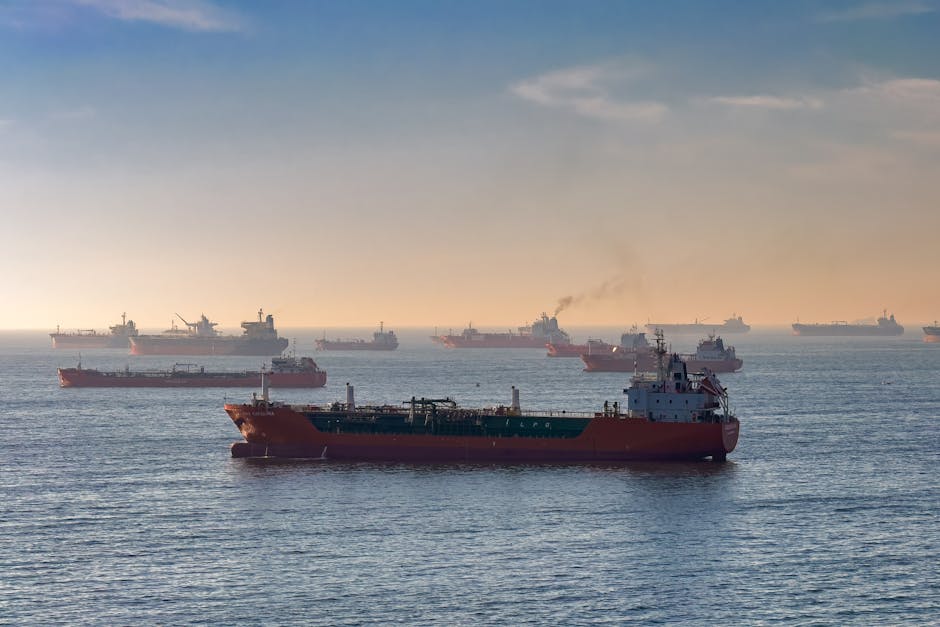
- The Iran conflict poses a significant threat to global stability, with the country’s control of the Strait of Hormuz giving it leverage in the region.
- Approximately 20% of the world’s oil passes through the Strait of Hormuz, making any disruption to traffic a major economic concern.
- Iran’s aim to control the Strait of Hormuz has significant implications for the global economy, regardless of a ceasefire.
- The Strait of Hormuz is a critical choke point for global oil supplies, with the United States and other Western powers historically seeking to maintain a strong military presence.
- Any disruption to oil traffic through the Strait of Hormuz has the potential to send shockwaves through the global economy.
The Iran war has been a persistent source of instability in the Middle East, with the latest developments suggesting that the conflict is either concluding with the world worse off, or escalation is just delayed again. A striking fact is that Iran’s control of the Strait of Hormuz, a critical choke point for global oil supplies, gives the country significant leverage in the region. With approximately 20% of the world’s oil passing through the strait, any disruption to traffic has the potential to send shockwaves through the global economy. As experts note, Iran’s aim to control the Strait of Hormuz for the foreseeable future, with or without a ceasefire, has significant implications for the global economy.
Historical Context: The Strait of Hormuz

The Strait of Hormuz has long been a source of tension in the region, with Iran’s strategic location giving the country a unique advantage. The strait, which connects the Persian Gulf to the Gulf of Oman, is just 21 miles wide at its narrowest point, making it a critical bottleneck for oil tankers. The United States and other Western powers have historically sought to maintain a strong military presence in the region to ensure the free flow of oil, but Iran’s increasing assertiveness has raised concerns about the potential for conflict. As the global economy continues to rely heavily on oil, the significance of the Strait of Hormuz cannot be overstated, and experts warn that any disruption to traffic could have far-reaching consequences.
Key Developments: Escalation and De-escalation

In recent months, the conflict between Iran and the United States has escalated, with both sides engaging in a series of tit-for-tat attacks. The downing of a US drone, the seizure of oil tankers, and the bombing of Saudi oil facilities have all contributed to a sense of rising tensions in the region. However, despite the escalation, there are signs that both sides may be seeking to de-escalate the conflict, at least in the short term. The deployment of additional US troops to the region, combined with Iran’s apparent willingness to negotiate, suggests that a ceasefire may be possible, although experts caution that any agreement is likely to be fragile and subject to breakdown. As the situation continues to unfold, it is clear that the key players involved, including the United States, Iran, and Saudi Arabia, will play a critical role in determining the outcome of the conflict.
Analysis: Causes, Effects, and Expert Insights
Experts point to a combination of factors as contributing to the current tensions in the region, including the US withdrawal from the Iran nuclear deal, the reimposition of sanctions, and Iran’s increasing assertiveness. The effects of the conflict are already being felt, with global oil prices rising and the potential for further disruption to supplies. According to Dr. Sanam Vakil, a specialist in Middle East politics, “the current situation is a classic example of a security dilemma, where one side’s efforts to increase its security are perceived as a threat by the other side, leading to an escalating cycle of tension.” As the conflict continues to unfold, it is clear that a nuanced understanding of the complex factors at play will be essential in navigating the challenges ahead.
Implications: Global Economic Stability
The implications of the Iran war are far-reaching, with the potential to impact global economic stability. As experts note, any disruption to oil supplies could have significant consequences for the global economy, including rising prices, reduced economic growth, and increased inflation. The impact would be felt not just in the United States, but also in Europe, Asia, and other regions that rely heavily on oil imports. According to a report by the International Energy Agency, a prolonged disruption to oil supplies could result in a loss of up to 1% of global GDP, highlighting the need for a swift and peaceful resolution to the conflict. As the situation continues to unfold, it is clear that the global economy will be watching with bated breath.
Expert Perspectives
Experts are divided on the potential outcome of the conflict, with some arguing that a ceasefire is possible in the short term, while others warn that the situation is likely to escalate further. According to Dr. Trita Parsi, a specialist in Iranian politics, “the current situation is a result of a decades-long cycle of mistrust and misunderstanding between the United States and Iran, and it will require a fundamental shift in approach to resolve.” In contrast, Dr. Michael Rubin, a specialist in Middle East politics, argues that “the United States must take a strong stance against Iranian aggression, including the use of military force if necessary, to protect its interests and those of its allies.” As the debate continues, it is clear that a range of perspectives will be essential in navigating the complex challenges ahead.
Looking ahead, the key question is what to watch in the coming weeks and months. Will the conflict escalate further, or will a ceasefire hold? What role will other regional players, such as Saudi Arabia and the United Arab Emirates, play in the conflict? And what are the potential implications for the global economy? As experts note, the situation is highly fluid, and any number of factors could influence the outcome. One thing is certain, however: the world will be watching with great interest as the situation continues to unfold, and the potential consequences for global economic stability will be a major concern for policymakers and business leaders alike.