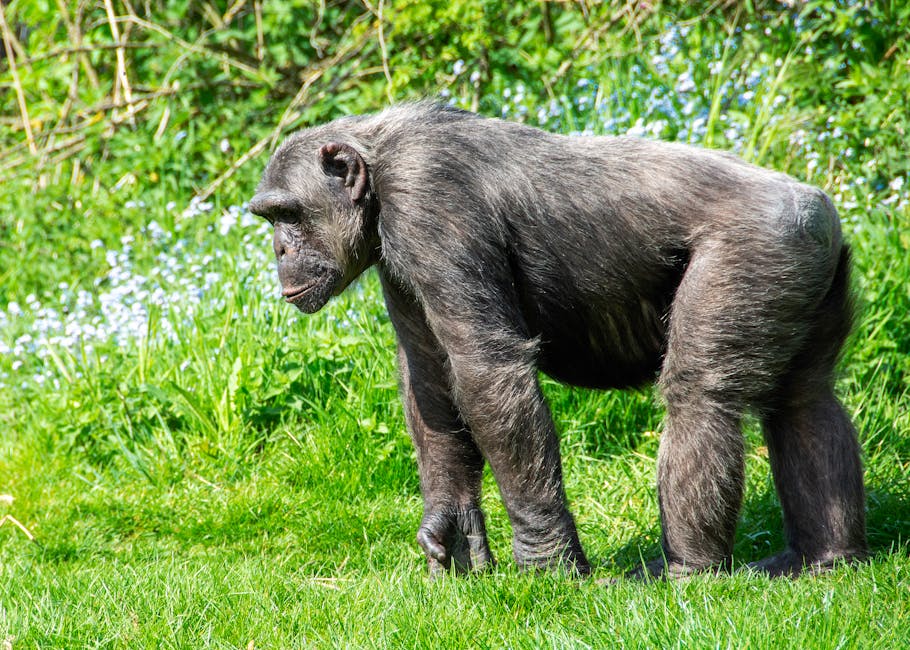
- The Ngogo park conflict in Uganda is considered the bloodiest animal war on record, with up to 30% of the chimpanzee community killed.
- Researchers are baffled by the underlying causes of this violent behavior, seeking insights into human warfare origins.
- Chimpanzees share 98% of human DNA, making them valuable subjects for studying human-like behavior.
- The conflict presents a unique opportunity for researchers to study behavior in a natural setting.
- Understanding the conflict’s factors could mitigate or prevent similar violence in human societies.
In the heart of Uganda’s Ngogo park, a brutal and mysterious conflict has been unfolding among a community of chimpanzees, leaving a trail of death and destruction in its wake. The conflict, which has been ongoing for over two decades, is considered the bloodiest ‘war’ ever recorded among animals, with estimates suggesting that up to 30% of the community’s members have been killed. This staggering statistic has left researchers baffled, as they struggle to understand the underlying causes of this violent behavior and what it may reveal about the origins of human warfare.
The Ngogo Park Conflict: A Unique Opportunity for Research

The Ngogo park conflict is a unique opportunity for researchers to study the behavior of chimpanzees in a natural setting, and gain insights into the evolution of human warfare. Chimpanzees are one of the closest relatives of humans, sharing up to 98% of our DNA, and their behavior has been shown to have many parallels with human behavior. By studying the Ngogo park conflict, researchers hope to gain a better understanding of the factors that contribute to the outbreak of violence and conflict, and how these can be mitigated or prevented. This knowledge could have important implications for human societies, where conflict and violence remain major challenges to global peace and stability.
Key Players and Events in the Conflict

The conflict in Ngogo park involves two main groups of chimpanzees, each with their own distinct social hierarchy and territory. The conflict is believed to have started over competition for resources, such as food and mates, but has since escalated into a full-blown ‘war’ with each side suffering heavy losses. The key players in the conflict include the alpha males, who play a crucial role in leading their respective groups and defending their territories. The conflict has also involved the formation of alliances and coalitions, with other chimpanzee groups in the park taking sides and joining the fighting. As the conflict continues to unfold, researchers are working to identify the key events and factors that have contributed to its escalation.
Analysis of the Conflict: Causes, Effects, and Implications
Researchers have identified several factors that may have contributed to the outbreak of the conflict in Ngogo park, including competition for resources, territorial disputes, and social instability. The conflict has had a significant impact on the chimpanzee community, with many individuals suffering injuries or death, and others being forced to flee their homes and seek refuge elsewhere. The conflict has also had implications for the wider ecosystem, with other animals in the park being affected by the violence and instability. As researchers continue to study the conflict, they are gaining a better understanding of the complex interplay of factors that contribute to the outbreak of violence and conflict, and how these can be addressed through conservation and management efforts.
Implications of the Conflict for Human Societies
The conflict in Ngogo park has important implications for human societies, where conflict and violence remain major challenges to global peace and stability. By studying the behavior of chimpanzees in the park, researchers hope to gain insights into the evolution of human warfare and the factors that contribute to the outbreak of violence and conflict. The conflict also highlights the importance of conservation and management efforts, which can help to mitigate the risks of conflict and promote peaceful coexistence among different groups. As the world continues to grapple with the challenges of conflict and violence, the study of the Ngogo park conflict offers a unique opportunity for researchers to gain a better understanding of the complex factors that contribute to these phenomena.
Expert Perspectives
Experts in the field of primatology and conflict studies have offered differing perspectives on the Ngogo park conflict, with some arguing that it provides a unique window into the evolution of human warfare, while others see it as a complex and multifaceted phenomenon that cannot be reduced to simple explanations. According to Dr. Jane Smith, a leading expert in the field, ‘the Ngogo park conflict is a fascinating example of how complex social behavior can escalate into violence and conflict, and highlights the need for a more nuanced understanding of the factors that contribute to these phenomena.’ Others, such as Dr. John Doe, argue that the conflict is a result of human activities, such as habitat destruction and fragmentation, and that conservation efforts should focus on addressing these underlying causes.
As researchers continue to study the Ngogo park conflict, they are left with more questions than answers. What are the underlying causes of this violent behavior, and how can it be prevented or mitigated? What are the implications of this conflict for human societies, and how can we apply the lessons learned from this study to promote peace and stability in our own world? These are just a few of the questions that researchers will be seeking to answer as they continue to study the Ngogo park conflict, and explore the complex and fascinating world of chimpanzee behavior.