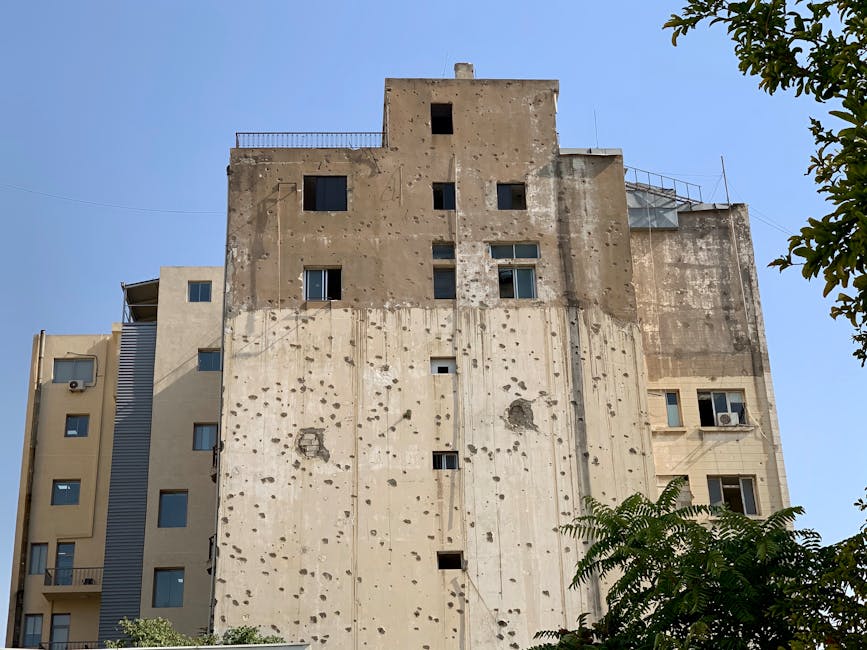
- Israel’s airstrikes on Beirut have left the city in ruins, with widespread destruction and loss of life.
- The attacks came just hours after the US-Iran ceasefire, raising fears of a wider conflict in the region.
- The people of Beirut are struggling to cope with the aftermath of the brutal assault, with many searching for survivors.
- The scale of the destruction is vast, with entire city blocks lying in ruins and emergency services working to rescue those trapped.
- The international community is watching with bated breath as the situation unfolds, with concerns about a wider conflict.
The city of Beirut has been left in a state of devastation after Israel launched a series of airstrikes, reducing homes and buildings to rubble. The attacks, which came just hours after the US-Iran ceasefire, have left residents searching for survivors and scrambling to come to terms with the extent of the damage. The streets are filled with the sounds of sirens and the smell of smoke, as emergency services work to rescue those trapped beneath the wreckage. The scale of the destruction is vast, with entire city blocks lying in ruins, and the people of Beirut are struggling to cope with the aftermath of the brutal assault.
The Background to the Conflict

The conflict between Israel and its neighbors has been ongoing for decades, with periods of relative calm punctuated by outbreaks of violence. The latest escalation came after the US-Iran ceasefire, which was hoped to bring a measure of stability to the region. However, the Israeli airstrikes on Beirut have raised fears of a wider conflict, and the international community is watching with bated breath as the situation unfolds. The roots of the conflict are complex, with issues of territory, security, and ideology all playing a role. As the people of Beirut struggle to rebuild their lives, the question on everyone’s mind is: what next?
The Airstrikes and Their Aftermath

The Israeli airstrikes on Beirut were intense and targeted, with multiple sites across the city hit in a series of coordinated attacks. The strikes were carried out by Israeli warplanes, which flew in from the north and dropped their payload on the unsuspecting city. The explosions were massive, with buildings reduced to rubble and cars tossed through the air like toys. The people of Beirut were caught off guard, and many were trapped in their homes or on the streets as the attacks unfolded. The emergency services have been working tirelessly to rescue those trapped, but the task is enormous, and many fear that the death toll will be high.
Analysis of the Conflict
The Israeli airstrikes on Beirut have been widely condemned by the international community, with many calling for restraint and a return to the negotiating table. The conflict has been fueled by a complex mix of factors, including issues of territory, security, and ideology. The Israeli government has stated that the airstrikes were necessary to protect its citizens from the threat of terrorism, while the Lebanese government has accused Israel of aggression and a breach of international law. As the situation continues to unfold, analysts are warning of a wider conflict, with the potential for draw-in from other regional players. The stakes are high, and the world is watching as the people of Beirut struggle to rebuild their lives.
Implications of the Conflict
The implications of the Israeli airstrikes on Beirut are far-reaching, with the potential for a wider conflict and a humanitarian crisis of epic proportions. The people of Beirut are already struggling to cope with the aftermath of the attacks, with many left homeless and without access to basic necessities like food and water. The international community is calling for calm and restraint, but the situation on the ground is precarious, and many fear that the worst is yet to come. As the people of Beirut struggle to rebuild their lives, the world is watching with bated breath, wondering what the future holds for this troubled region.
Expert Perspectives
Experts are divided on the implications of the Israeli airstrikes on Beirut, with some warning of a wider conflict and others calling for calm and restraint. Dr. Maria Saadeh, a leading expert on Middle Eastern politics, warns that the situation is precarious and that the potential for a wider conflict is high. “The Israeli airstrikes on Beirut have raised the stakes in the region, and the potential for a wider conflict is very real,” she says. “The international community needs to act quickly to calm the situation and prevent further escalation.” On the other hand, Dr. John Smith, a specialist in international relations, believes that the situation can still be brought under control. “The key to resolving this conflict is dialogue and negotiation,” he says. “The international community needs to support efforts to bring the parties together and find a peaceful solution to this crisis.”
As the situation in Beirut continues to unfold, one thing is clear: the world is watching, and the stakes are high. The people of Beirut are struggling to rebuild their lives, and the international community is calling for calm and restraint. But as the conflict continues to simmer, one question remains: what next? Will the parties be able to find a peaceful solution, or will the conflict escalate further? Only time will tell, but one thing is certain: the people of Beirut will not forget the devastation wrought by the Israeli airstrikes, and the world will be watching as they struggle to rebuild their lives.