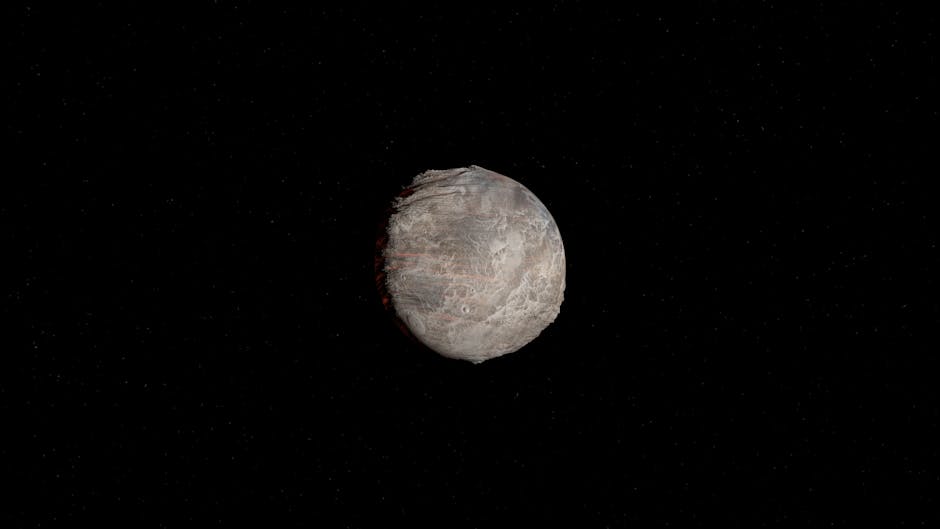
- Exoplanet TOI-5205 b defies theories with an unexplainable atmosphere.
- The exoplanet has a surprisingly poor atmosphere in heavy elements.
- The James Webb Space Telescope provided unprecedented insights into the planet’s composition.
- TOI-5205 b’s atmosphere is less enriched with heavy elements than its own star.
- The discovery challenges our current understanding of how planets form and evolve.
The discovery of exoplanet TOI-5205 b is sending shockwaves through the scientific community, as it challenges our current understanding of how planets form and evolve. Located orbiting a small, cool star, this Jupiter-sized world has an atmosphere that is surprisingly poor in heavy elements, a finding that has left scientists baffled.
The James Webb Space Telescope, which spotted TOI-5205 b, has provided unprecedented insights into the planet’s composition, revealing an atmosphere that is even less enriched with heavy elements than its own star. This discovery is particularly significant, as it defies the conventional wisdom that giant planets like TOI-5205 b should have atmospheres rich in heavy elements, which are thought to be essential for their formation.
The Puzzle of Planet Formation Theories

According to current theories of planet formation, giant planets like TOI-5205 b are thought to form through a process known as core accretion, where a solid core forms first, and then accretes a massive atmosphere. However, the discovery of TOI-5205 b’s atmosphere suggests that this process may not be as straightforward as previously thought. The lack of heavy elements in the planet’s atmosphere raises questions about the role of these elements in the formation of giant planets, and whether our current understanding of this process is incomplete.
One possible explanation for the lack of heavy elements in TOI-5205 b’s atmosphere is that the planet may have formed through a different mechanism, such as disk instability, where the planet forms directly from the collapse of a disk of gas and dust. However, this theory is still highly speculative, and more research is needed to determine the validity of this hypothesis. The study of TOI-5205 b’s atmosphere is an active area of research, with scientists using a variety of methods to analyze the planet’s composition and gain insights into its formation and evolution.
Uncovering the Secrets of TOI-5205 b’s Atmosphere

The James Webb Space Telescope’s discovery of TOI-5205 b’s atmosphere has provided a unique opportunity for scientists to study the planet’s composition in unprecedented detail. By analyzing the light passing through the planet’s atmosphere, scientists can identify the presence of different elements and molecules, and gain insights into the planet’s formation and evolution. The data from the James Webb Space Telescope has revealed a complex and dynamic atmosphere, with a variety of chemical species present, including hydrogen, helium, and methane.
The study of TOI-5205 b’s atmosphere is not only providing insights into the planet’s formation and evolution but also has implications for our understanding of the formation of other planets in the universe. The discovery of this strange exoplanet is a reminder that there is still much to be learned about the universe and its many mysteries. As scientists continue to study TOI-5205 b and other exoplanets, they may uncover new and exciting secrets about the formation and evolution of planets, and the possibility of life beyond Earth.
The Implications of TOI-5205 b’s Discovery
The discovery of TOI-5205 b’s unexplainable atmosphere has significant implications for our understanding of the formation and evolution of planets. The fact that this planet’s atmosphere is poor in heavy elements challenges our current theories of planet formation and raises questions about the role of these elements in the formation of giant planets. The study of TOI-5205 b’s atmosphere is an active area of research, with scientists using a variety of methods to analyze the planet’s composition and gain insights into its formation and evolution.
The discovery of TOI-5205 b also has implications for the search for life beyond Earth. The fact that this planet’s atmosphere is poor in heavy elements raises questions about the possibility of life on this planet, and whether the presence of heavy elements is necessary for life to exist. The study of TOI-5205 b’s atmosphere is providing insights into the planet’s habitability, and whether it could potentially support life.
A New Era of Exoplanet Research
The discovery of TOI-5205 b’s unexplainable atmosphere is just the beginning of a new era of exoplanet research. As scientists continue to study this strange exoplanet and others like it, they may uncover new and exciting secrets about the formation and evolution of planets, and the possibility of life beyond Earth. The James Webb Space Telescope is providing unprecedented insights into the composition and atmospheres of exoplanets, and is opening up new avenues of research into the study of these mysterious worlds.
As we look to the future, it is clear that the study of exoplanets like TOI-5205 b will continue to play a major role in our understanding of the universe and its many mysteries. The discovery of this strange exoplanet is a reminder that there is still much to be learned about the universe, and that the study of exoplanets is an exciting and rapidly evolving field. What will future discoveries reveal about the formation and evolution of planets, and the possibility of life beyond Earth?