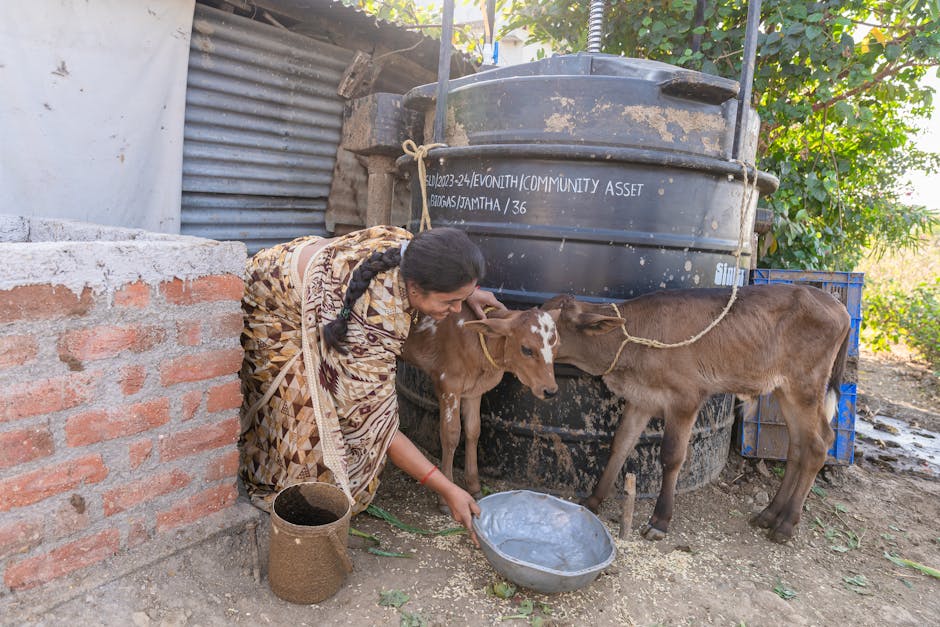
- The US dairy industry produces over 2 million tons of manure daily, posing significant environmental impacts.
- Manure digesters convert waste into biogas and reduce methane emissions from livestock, a potent greenhouse gas.
- Anaerobic bacteria break down organic matter in manure digesters, producing biogas that can be used as fuel.
- Government incentives for manure digesters have encouraged their adoption, but also led to concerns about larger factory farms.
- Manure digesters have the potential to make a significant impact on the environment by mitigating climate change.
The US dairy industry produces over 2 million tons of manure daily, with significant environmental impacts. Manure digesters have emerged as a potential solution, converting waste into biogas and reducing methane emissions. With the US aiming to cut greenhouse gas emissions, these digesters are gaining attention
Converting Manure to Biogas: A Promising Technology

Manure digesters use anaerobic bacteria to break down organic matter, producing biogas that can be used as fuel. This approach reduces methane emissions from livestock, a potent greenhouse gas. As the world seeks to mitigate climate change, such innovative solutions are crucial, with the potential to make a significant impact on the environment
The Role of Incentives in Shaping the Dairy Industry
Government incentives for manure digesters have encouraged their adoption, but also led to the growth of larger factory farms. This has sparked concerns about animal welfare, water pollution, and the concentration of agricultural production. As the dairy industry evolves, it is essential to consider the broader implications of these developments, including their impact on rural communities and the environment
Assessing the Effectiveness of Manure Digesters
Studies have shown that manure digesters can reduce methane emissions from dairy farms by up to 80%. However, the overall effectiveness of these systems depends on various factors, including the quality of the manure, the design of the digester, and the management of the biogas produced. Experts emphasize the need for careful planning and implementation to maximize the benefits of these systems, while minimizing potential drawbacks
Implications for the Environment and Rural Communities
The widespread adoption of manure digesters could have significant implications for the environment and rural communities. On the one hand, reduced methane emissions could contribute to a decrease in greenhouse gas emissions. On the other hand, the growth of larger factory farms could lead to increased water pollution, soil degradation, and loss of biodiversity, highlighting the need for a balanced approach that considers both environmental and social factors
As the dairy industry continues to evolve, it is essential to monitor the impact of manure digesters and other innovative solutions. Will these technologies be enough to mitigate the environmental effects of large-scale agriculture, or will more fundamental changes be needed to ensure a sustainable food system, and what role will policy-makers and industry leaders play in shaping the future of dairy production?