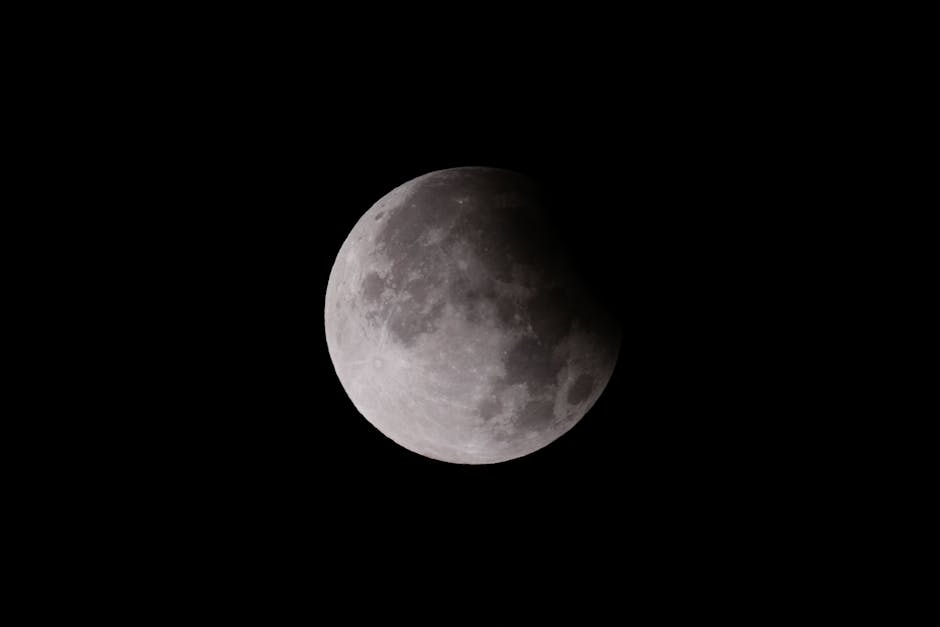
- The Artemis crew will experience a 40-minute radio blackout as they pass behind the lunar surface.
- The loss of communication is a natural consequence of the spacecraft’s trajectory and the Moon’s position.
- The crew will rely solely on their training and onboard systems during the blackout period.
- The 40-minute duration is a relatively short period, but still poses significant challenges for the crew and Mission Control.
- Deep space communication is a complex challenge that requires precise navigation and technical expertise.
The Artemis mission is set to make history as the first crewed mission to the Moon in over five decades, but as the astronauts pass behind the lunar surface, they will experience a moment of silence and solitude as communication with the Earth is blocked. For 40 minutes, the crew will be cut off from Mission Control in Houston, relying solely on their training and onboard systems to navigate this critical phase of the mission. This period of radio blackout is a result of the Moon’s position between the Earth and the spacecraft, blocking the signal and leaving the astronauts to their own devices.
Passing into the Lunar Shadow

The loss of communication is a natural consequence of the spacecraft’s trajectory, which takes it behind the Moon and out of sight of the Earth. As the Artemis crew enters into the lunar shadow, they will be shielded from the Earth’s signal, unable to transmit or receive any data. This period of isolation is a critical phase of the mission, as the crew must rely on their onboard systems and pre-programmed instructions to navigate the lunar orbit. The 40-minute blackout period is a relatively short duration, but it still poses significant challenges for the crew and Mission Control, who must wait anxiously for the spacecraft to reestablish contact.
Technical Challenges of Deep Space Communication

The technical challenges of deep space communication are significant, and the Artemis mission is pushing the boundaries of what is currently possible. The vast distances between the Earth and the Moon mean that communication signals are delayed by several seconds, making real-time communication impossible. Furthermore, the Moon’s position between the Earth and the spacecraft creates a barrier that blocks the signal, making it impossible for the crew to communicate with Mission Control. The blackout period is a reminder of the significant technical hurdles that must be overcome in order to establish reliable communication in deep space.
Preparing for the Unexpected
Despite the challenges posed by the radio blackout, the Artemis crew is well-prepared to handle any unexpected situations that may arise. The crew has undergone extensive training to prepare for this phase of the mission, and the spacecraft is equipped with redundant systems and backup power sources. The crew will also be relying on pre-programmed instructions and onboard navigation systems to guide them through the lunar orbit. However, the blackout period still poses significant risks, and the crew must be prepared to respond to any unexpected situations that may arise. The success of the mission depends on the crew’s ability to navigate this critical phase and reestablish contact with the Earth.
Implications for Future Deep Space Missions
The implications of the radio blackout are significant, not just for the Artemis mission, but for future deep space missions. As spacecraft travel further and further away from the Earth, the challenges of communication will become increasingly significant. The development of new communication technologies and strategies will be critical to the success of these missions, and the Artemis crew’s experience will provide valuable insights into the challenges of deep space communication. The blackout period is a reminder of the significant technical hurdles that must be overcome in order to establish reliable communication in deep space, and it highlights the need for continued investment in research and development.
Expert Perspectives
Experts in the field of deep space communication are watching the Artemis mission with great interest, as it poses significant challenges for communication and navigation. According to Dr. Maria Zuber, a leading expert in space communication, the radio blackout is a critical phase of the mission that requires careful planning and preparation. “The blackout period is a reminder of the significant technical hurdles that must be overcome in order to establish reliable communication in deep space,” she said. “The success of the mission depends on the crew’s ability to navigate this critical phase and reestablish contact with the Earth.”
As the Artemis crew prepares to embark on this historic mission, the question on everyone’s mind is what other challenges they will face as they journey to the Moon. Will they be able to overcome the technical hurdles and establish reliable communication, or will the radio blackout pose significant risks to the success of the mission? Only time will tell, but one thing is certain – the Artemis mission is pushing the boundaries of what is currently possible, and its success will pave the way for future deep space missions.