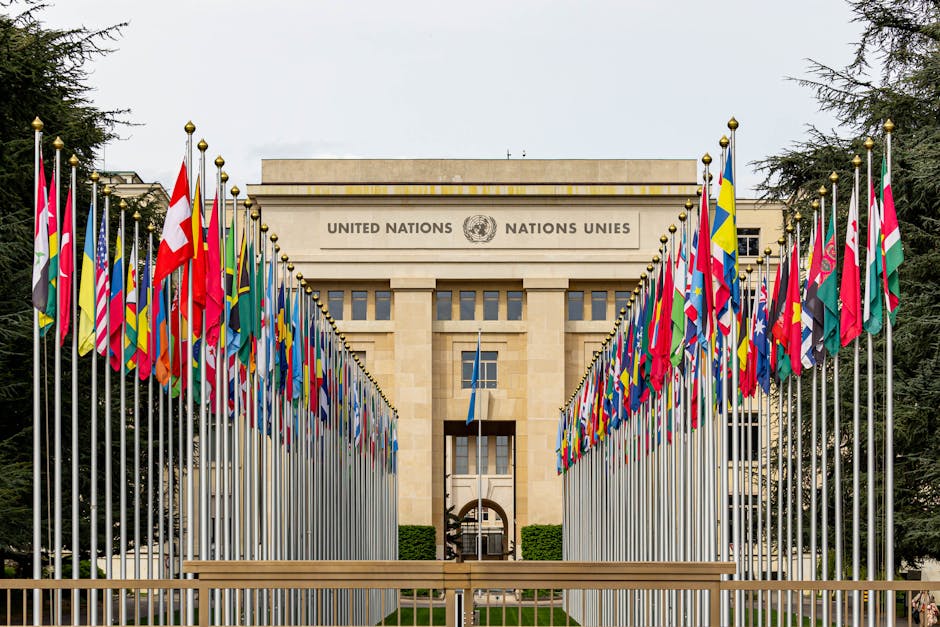
- WHO Member States extended negotiations on the Pathogen Access and Benefit Sharing (PABS) annex to the WHO Pandemic Agreement.
- The PABS annex aims to establish a fair and equitable system for sharing pathogens and benefits arising from their use.
- The WHO Pandemic Agreement is a landmark instrument promoting international cooperation and coordination in global health security.
- The agreement has been under negotiation since 2020, with the PABS annex as a key component.
- The extension of negotiations will allow for further discussions and refinement of the PABS annex and the WHO Pandemic Agreement.
The World Health Organization (WHO) Member States have agreed to extend negotiations on the Pathogen Access and Benefit Sharing (PABS) annex to the WHO Pandemic Agreement, a crucial component of the global health security framework.
This decision was made to allow for further discussions and refinement of the agreement, which aims to establish a fair and equitable system for sharing pathogens and benefits arising from their use.
The Pandemic Agreement: A New Era for Global Health Security

The WHO Pandemic Agreement is a landmark instrument that seeks to strengthen global health security by promoting international cooperation and coordination in the prevention, detection, and response to public health emergencies.
The agreement has been under negotiation since 2020, and the PABS annex is one of its key components, as it addresses the complex issues surrounding access to pathogens and the sharing of benefits.
Pathogen Access and Benefit Sharing: A Delicate Balance

The PABS annex aims to strike a balance between the need for access to pathogens for research and public health purposes, and the need to ensure that countries and communities that provide these pathogens receive fair and equitable benefits.
This balance is critical, as it can have significant implications for global health security, including the development of vaccines, diagnostics, and treatments for infectious diseases.
Expert Perspectives: The Way Forward
According to Dr. Maria Van Kerkhove, a leading expert on infectious diseases, the extension of negotiations on the PABS annex is a positive development, as it allows for further refinement of the agreement and ensures that all countries have a voice in the process.
Dr. Van Kerkhove emphasized that the PABS annex is a critical component of the WHO Pandemic Agreement, and its successful negotiation will have a significant impact on global health security.
Broader Implications: A Global Health Security Framework
The WHO Pandemic Agreement and the PABS annex have significant implications for global health security, as they aim to establish a framework for international cooperation and coordination in the prevention, detection, and response to public health emergencies.
This framework is critical, as it can help to prevent the spread of infectious diseases, reduce the risk of pandemics, and promote global health security.
The extension of negotiations on the PABS annex is a positive step towards achieving this goal, as it allows for further discussions and refinement of the agreement.
Looking Ahead: The Road to a Safer World
As the negotiations on the PABS annex resume in late-April, the global health community will be watching closely, as the outcome will have significant implications for global health security.
The question on everyone’s mind is: will the WHO Member States be able to reach a consensus on the PABS annex, and what will be the impact on global health security? Only time will tell, but one thing is certain – the world is watching, and the stakes are high.