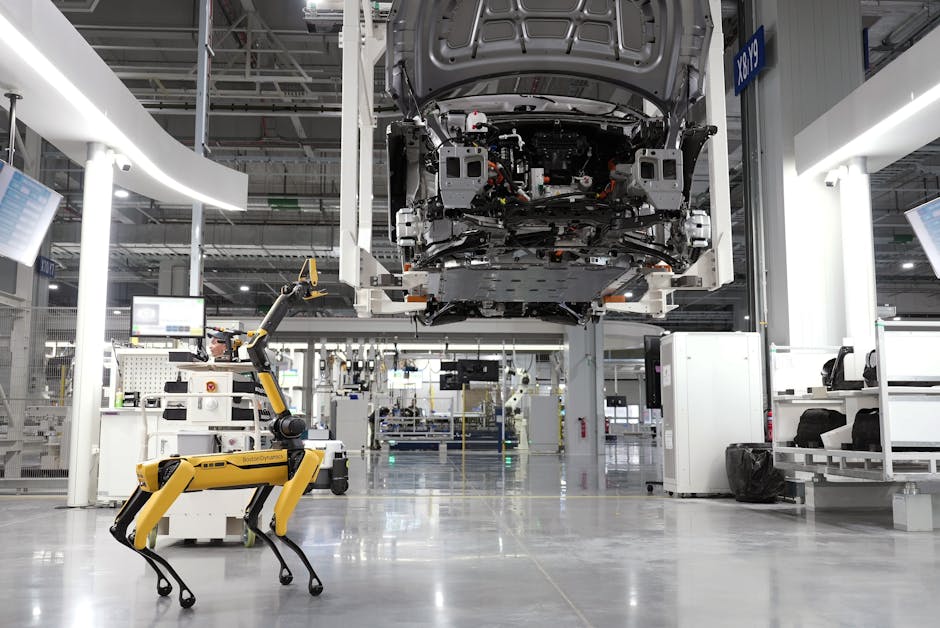
- Japan’s workforce is shrinking, with a population projected to decline by 30% by 2060 due to an aging population and low birth rates.
- The country is turning to AI-powered robots to maintain productivity in factories, warehouses, and critical infrastructure.
- Japan’s unique model combines startup innovation with corporate scale, enabling rapid development and deployment of AI-powered robots.
- Startups in Japan are driving innovation in AI-powered robots, while corporations are scaling up the technology for widespread adoption.
- Japan’s push into robotics and physical AI is driven more by necessity than innovation, in response to the country’s labor shortages and productivity pressures.
Japan’s push into robotics and physical AI is emerging as a significant industrial battleground, driven more by necessity than innovation. With a shrinking workforce and mounting pressure to sustain productivity, companies are increasingly deploying AI-powered robots across factories, warehouses, and critical infrastructure.
The country’s aging population and low birth rates have resulted in a dwindling workforce, with the population projected to decline by 30% by 2060. This demographic shift has forced companies to seek alternative solutions to maintain productivity, with AI-powered robots being a key area of focus.
How Japan’s Unique Model is Driving AI Adoption

Japan’s approach to AI adoption is distinct, with a model where startups innovate and corporations provide scale. This collaborative approach has enabled the rapid development and deployment of AI-powered robots, with startups providing the initial innovation and corporations scaling up the technology.
This model has been successful, with companies such as Honda and Toyota leveraging AI-powered robots to improve manufacturing efficiency and reduce costs. The use of AI-powered robots has also enabled these companies to maintain productivity levels despite the shrinking workforce.
The Role of Startups in Japan’s AI Ecosystem

Startups have played a crucial role in Japan’s AI ecosystem, with many focusing on the development of AI-powered robots. These startups have been able to innovate and experiment with new technologies, with corporations providing the necessary funding and resources to scale up their innovations.
One such startup is Preferred Networks, which has developed an AI-powered robot that can learn and adapt to new tasks. This robot has been deployed in factories and warehouses, where it has improved efficiency and reduced costs. The success of Preferred Networks has demonstrated the potential of Japan’s startup ecosystem to drive AI innovation.
Japan’s AI Investment and Research Initiatives
The Japanese government has also invested heavily in AI research and development, with a focus on robotics and physical AI. The government has established several research initiatives, including the New Energy and Industrial Technology Development Organization (NEDO), which provides funding and support for AI research and development.
These initiatives have enabled Japan to establish itself as a leader in AI research and development, with the country ranking third in the world in terms of AI-related patents. The government’s investment in AI research and development has also attracted foreign investment, with many international companies establishing AI research and development centers in Japan.
The Global Implications of Japan’s AI Push
Japan’s push into AI has significant implications for the global economy, with the potential to disrupt industries and create new opportunities. The use of AI-powered robots has the potential to improve efficiency and reduce costs, but it also raises concerns about job displacement and the need for workers to develop new skills.
The success of Japan’s AI model has also attracted attention from other countries, with many seeking to replicate the country’s approach to AI adoption. The use of AI-powered robots has the potential to address demographic challenges and improve productivity, making it an attractive solution for countries facing similar challenges.
What’s Next for Japan’s AI Revolution
As Japan continues to push the boundaries of AI innovation, the country is likely to face several challenges, including the need to address concerns about job displacement and the development of new skills. The government will also need to ensure that the benefits of AI adoption are shared equitably, with a focus on creating new opportunities for workers and addressing demographic challenges.
The future of Japan’s AI revolution will depend on the country’s ability to balance innovation with social responsibility, ensuring that the benefits of AI adoption are shared by all. As the world watches Japan’s AI push with interest, one question remains: can other countries replicate Japan’s unique model and achieve similar success in the AI revolution?