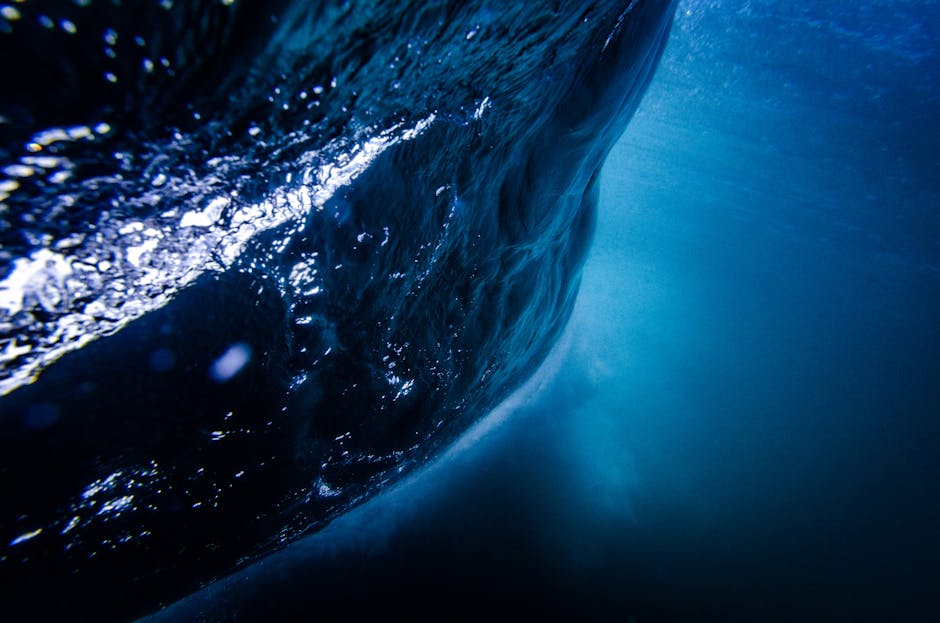
- The world’s oceans are experiencing a sudden darkening phenomenon with open waters becoming increasingly darker.
- The decrease in light penetration is a complex issue requiring further research to determine its effects on marine life.
- The darkening of the oceans is a relatively recent development, first noticed in the past few decades.
- The cause of the darkening shift is believed to be linked to changes in the ocean’s chemistry and organic matter presence.
- The ongoing darkening may lead to significant changes in marine ecosystems, potentially resulting in species loss and disrupted food chains.
- → The Sudden Darkening of the World’s Oceans: A New Era for Marine Ecosystems
- → Unraveling the Mystery of the Darkening Oceans: An Interdisciplinary Approach
- → The Consequences of a Darker Ocean: Impacts on Marine Life and Human Societies
- → A Call to Action: The Need for Further Research and International Cooperation
A striking phenomenon is occurring in the world’s oceans, with the open waters becoming increasingly darker. This shift is having a profound impact on entire ecosystems, but the full consequences of this change are not yet fully understood. According to oceanographer Tim Smyth, the decrease in light penetration is a complex issue that requires further research to determine its effects on marine life.
The Sudden Darkening of the World’s Oceans: A New Era for Marine Ecosystems

The darkening of the oceans is a relatively recent development, with scientists first noticing the change in the past few decades. The cause of this shift is still unclear, but it is believed to be linked to changes in the ocean’s chemistry and the amount of organic matter present. As the oceans continue to darken, it is likely that the ecosystems that rely on them will undergo significant changes, potentially leading to the loss of certain species and the disruption of delicate food chains.
The decrease in light penetration is not uniform, with some areas experiencing more significant changes than others. This variability makes it challenging to predict the exact consequences of the darkening oceans, but it is clear that the impact will be far-reaching. The effects of this phenomenon will be felt not only by marine life but also by the humans who rely on the oceans for food, livelihood, and recreation.
Unraveling the Mystery of the Darkening Oceans: An Interdisciplinary Approach

Scientists are working to understand the causes and consequences of the darkening oceans, using a combination of field observations, laboratory experiments, and computer modeling. By studying the ocean’s chemistry, biology, and physics, researchers hope to gain a better understanding of the complex interactions that are driving this shift. The study of the darkening oceans is an interdisciplinary effort, involving experts from fields such as oceanography, ecology, and climate science.
The research is still in its early stages, but it has already yielded some interesting insights. For example, studies have shown that the darkening of the oceans is not just a result of changes in the amount of organic matter present, but also of shifts in the ocean’s circulation patterns and the amount of light that is scattered by the water itself. These findings suggest that the darkening of the oceans is a complex and multifaceted phenomenon that will require a sustained and coordinated research effort to fully understand.
The Consequences of a Darker Ocean: Impacts on Marine Life and Human Societies
The darkening of the oceans has significant implications for marine life, from the tiny phytoplankton that form the base of the ocean’s food web to the massive blue whales that roam the open waters. As the oceans become darker, it is likely that the growth and productivity of phytoplankton will decline, leading to a cascade of effects throughout the food chain. This could have significant consequences for the health of marine ecosystems and the humans who rely on them for food and livelihood.
The impact of the darkening oceans will not be limited to the marine environment, however. The oceans play a critical role in regulating the Earth’s climate, and changes to their chemistry and circulation patterns could have significant effects on the global climate system. For example, the oceans absorb and store large amounts of carbon dioxide, a key greenhouse gas. If the darkening of the oceans were to affect this process, it could have significant implications for the global effort to mitigate climate change.
A Call to Action: The Need for Further Research and International Cooperation
The darkening of the oceans is a global phenomenon that requires a coordinated and sustained research effort to understand its causes and consequences. This will involve the collaboration of scientists, policymakers, and stakeholders from around the world, working together to study the oceans and develop strategies for mitigating the effects of this shift. By working together, we can gain a better understanding of the complex interactions that are driving the darkening of the oceans and develop effective solutions to address its impacts.
As we look to the future, it is clear that the darkening of the oceans will be a major challenge for marine ecosystems and human societies. But it is also an opportunity for us to come together and work towards a common goal: the protection and preservation of the world’s oceans. By supporting further research and international cooperation, we can help to ensure that the oceans continue to thrive and provide the many benefits that they offer to humanity. The question is, will we be able to rise to this challenge and protect the oceans before it’s too late?